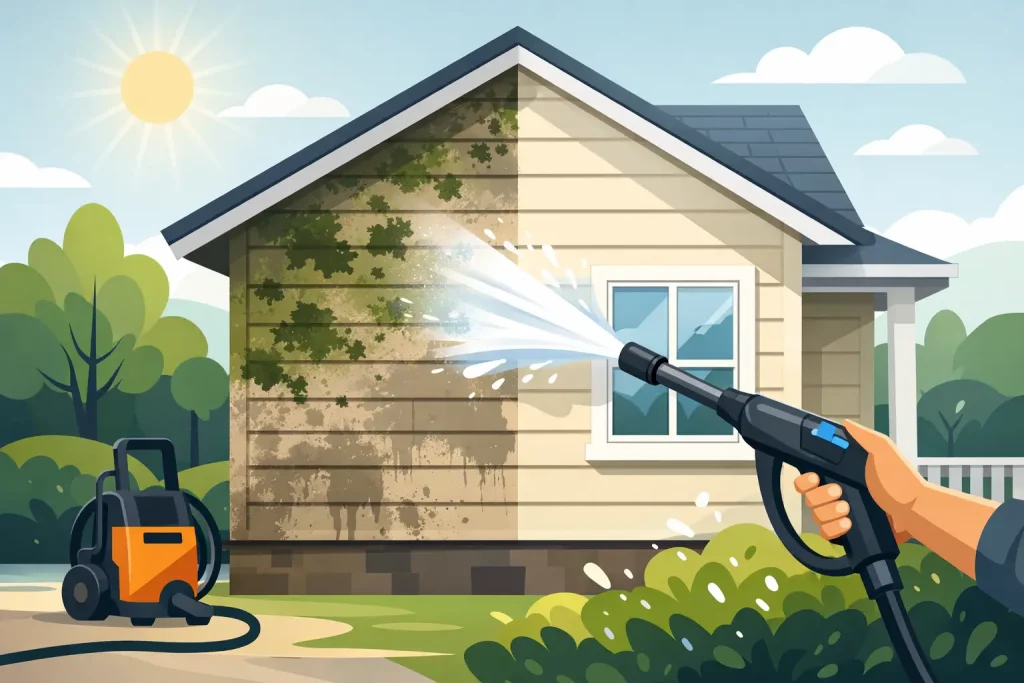
Stucco can make a home or commercial building look clean, polished, and timeless – until Georgia humidity, pollen, algae, and road dust settle into its textured finish. The challenge is knowing how to wash stucco without damage. Unlike smooth vinyl or concrete, stucco has a porous, uneven surface that can hold moisture and stain easily. Too much water pressure can leave lasting marks, force water behind the finish, or loosen weak areas.
The safest approach is not simply turning down a pressure washer. It is using the right cleaning solution, proper rinse technique, and enough care to protect the wall, landscaping, windows, and surrounding surfaces. For Atlanta-area property owners, soft washing is usually the most effective way to restore stucco without taking unnecessary risks.
Why Stucco Needs a Different Cleaning Method
Stucco is a cement-based exterior finish with a textured surface. Traditional stucco is durable, but it is not invincible. Hairline cracks, aging paint, damaged sealant around windows, and areas of previous moisture intrusion can all make a wall more vulnerable during cleaning.
High pressure is the most common mistake. A close-range pressure-washer spray can cut into soft or deteriorating stucco, erode the textured finish, strip paint, and drive water into cracks or openings. That trapped moisture may lead to staining, peeling, mold growth, or damage beneath the exterior surface.
A professional cleaning method relies on cleaning chemistry first and pressure second. In other words, the solution does the heavy lifting. Low-pressure water then rinses away loosened dirt, algae, mildew, and organic staining without blasting the wall.
Inspect Before You Wash Stucco Without Damage
A careful inspection should always come before cleaning. Walk around the property and look closely at the stucco, particularly near windows, doors, rooflines, gutters, and downspouts. These areas often collect runoff and show algae growth first.
Watch for cracks, crumbling sections, loose material, peeling paint, exposed flashing, or gaps in caulk and sealant. Cleaning will not repair these issues, and spraying directly over them can make them worse. Small cracks may need sealing before washing. Larger damaged areas should be evaluated and repaired before any exterior cleaning begins.
It also helps to identify what is actually causing the discoloration. Green or black growth is often algae or mildew. Brown streaks below metal components may be rust-related. White, chalky residue can be efflorescence, which is a mineral deposit rather than surface dirt. Each problem responds differently, so using one harsh cleaner for every stain is not a reliable solution.
Use Soft Washing Instead of High Pressure
Soft washing combines a surface-appropriate cleaning solution with a low-pressure rinse. It is particularly well suited for painted stucco, synthetic stucco systems, and older exterior finishes that may not tolerate aggressive cleaning.
The process begins by protecting nearby plants and wetting landscaping as needed. A trained technician applies a diluted cleaner evenly, working in manageable sections so the product does not dry on the wall. After allowing enough dwell time for the solution to break down organic buildup, the surface is rinsed gently from top to bottom.
The goal is a thorough clean, not a forceful one. On many stucco surfaces, the rinse should feel more like a strong garden hose than a pressure washer cutting through grime. A low-pressure system can still deliver excellent results because algae and mildew are treated at the source instead of being scraped away by brute force.
Protect Windows, Plants, and Adjacent Surfaces
Stucco cleaning is about more than the walls. The surrounding property needs attention, too. Cleaning solutions can affect landscaping if they are applied carelessly, while overspray can leave residue on windows, exterior lighting, painted trim, and decorative stone.
Before work begins, move outdoor furniture, cover or relocate sensitive items, and close all windows and doors. Nearby plants should be pre-watered, monitored during the job, and rinsed again afterward. This helps dilute any incidental contact with cleaning solution.
Keep water away from electrical fixtures and avoid spraying into soffit vents, dryer vents, door thresholds, or gaps around window frames. If a wall has failing caulk or visible cracks, do not assume a low-pressure rinse makes it safe. Water can still find an opening when it is applied for an extended period.
Avoid These Common Stucco Cleaning Mistakes
Even a well-intentioned DIY project can create expensive repairs when the wrong equipment or product is used. Avoid these four mistakes:
- Using a narrow spray tip or spraying close to the wall, which can gouge the finish and leave visible wand marks.
- Applying undiluted or overly strong chemicals, which may discolor paint, harm vegetation, or leave streaking on the stucco.
- Letting cleaning solution dry in direct sun, especially on dark-colored or painted finishes.
- Treating every stain as mildew, even when it may be rust, mineral buildup, paint oxidation, or water damage.
A stiff wire brush is another poor choice for most stucco. It can remove loose material and damage the texture. For a small isolated spot, a soft brush may be appropriate, but it should be used gently and only after testing an inconspicuous area.
Timing Matters in Atlanta’s Climate
Atlanta’s warm, humid climate creates ideal conditions for algae and mildew, especially on shaded north-facing walls and areas beneath trees. Spring pollen can also cling to textured stucco, while summer storms leave moisture behind in low-sunlight areas.
For many properties, annual cleaning is enough to maintain curb appeal. Homes surrounded by heavy tree cover, properties near busy roads, and commercial buildings with shaded facades may need attention more often. The right schedule depends on how quickly growth returns, not on a fixed calendar date.
Choose a mild, overcast day when possible. Extreme heat can cause cleaning products to dry too quickly, while heavy rain can dilute them before they have time to work. If temperatures are near freezing, postpone exterior washing to avoid moisture-related concerns.
When Professional Stucco Cleaning Is the Better Choice
A homeowner may be able to rinse light pollen from a sound stucco wall with a hose. However, established algae, black mildew staining, multi-story walls, delicate painted finishes, and visible surface damage call for professional care.
Professional technicians have the equipment to apply solutions evenly, adjust dilution ratios for the condition of the surface, and rinse at controlled pressure. They also understand how to protect landscaping and recognize when a stain requires a different treatment rather than more pressure.
For property managers, professional service also creates a more consistent result across storefronts, office exteriors, multifamily buildings, and common areas. A clean stucco facade improves first impressions, but the real value is preserving the exterior material while keeping the property maintained.
Capital City Power Washing uses surface-appropriate soft washing methods to remove organic buildup while protecting the stucco finish underneath. Licensed, insured service and careful attention to surrounding areas help homeowners and commercial property owners get the visible transformation they want without gambling on high pressure.
Keep Stucco Cleaner Between Washings
Regular maintenance can reduce how often deep cleaning is needed. Keep gutters and downspouts working correctly so dirty runoff does not streak down the walls. Trim back shrubs and tree branches that hold moisture against the exterior. Address irrigation overspray, since repeated water contact can encourage algae growth and leave mineral deposits.
It is also wise to inspect stucco after major storms and before selling, leasing, or hosting an important event at the property. Catching a small crack or early algae patch is easier and less costly than waiting until the wall looks neglected.
Clean stucco should look refreshed, not scarred, faded, or uneven. When the method respects the material, the result is a brighter exterior and greater confidence that the surface is being cared for properly.