A gutter can look like a small detail until a hard Atlanta rainstorm sends water over the edge, down the siding, and toward the foundation. This gutter maintenance guide explains what to watch for, when to act, and when professional cleaning is the safer choice for your home, rental property, office, or retail building.
Gutters have one straightforward job: collect rainwater from the roof and move it safely away from the structure. When leaves, pine needles, shingle grit, nests, or standing water block that path, the consequences can extend well beyond a messy roofline. Clogged gutters can contribute to fascia damage, roof leaks, stained siding, soil erosion, basement moisture, and foundation concerns.
Why gutter maintenance matters in Atlanta
Atlanta properties face frequent rain, humid conditions, mature tree cover, and seasonal leaf drop. Those conditions can fill a gutter system faster than many property owners expect. Pine needles are especially troublesome because they weave together and create dense clogs that do not always rinse out during the next storm.
Overflow is not the only warning sign. A gutter may hold wet debris for weeks, creating the conditions for algae, mildew, insects, and corrosion. The added weight can pull fasteners loose or cause sections of the gutter to sag. On a commercial property, that can affect the building’s appearance and create a slip hazard near entryways when water drains where it should not.
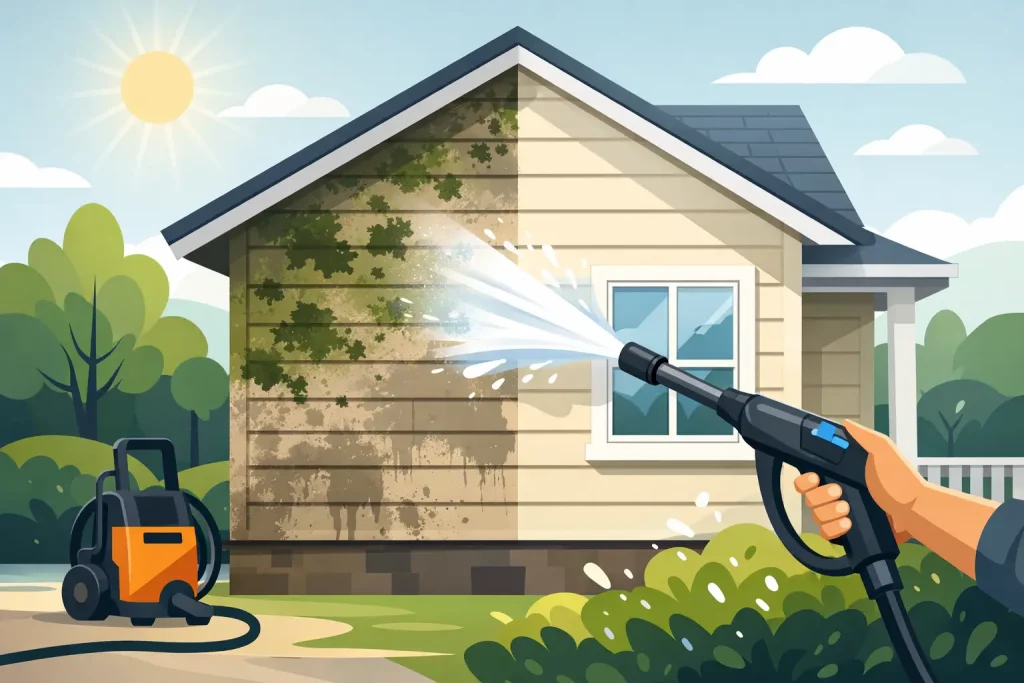
Routine care protects the parts of a property that are expensive and inconvenient to repair. It also supports curb appeal. Clean, properly functioning gutters complement a freshly washed exterior instead of leaving dark overflow streaks on siding, brick, stucco, or concrete.
A gutter maintenance guide for every season
The right cleaning schedule depends on the property, not just the calendar. A home under several oak or pine trees usually needs more attention than a home with open rooflines. Properties with a steep roof, tall gutters, or multiple stories may also need a professional approach from the start.
For most Atlanta-area properties, plan to inspect gutters at least twice each year: once after spring pollen and seed drop, and again after fall leaves have finished falling. If trees hang directly over the roof, quarterly checks are often more realistic.
Spring: clear pollen, seeds, and storm debris
Spring can leave a surprising amount of debris behind. Pollen coats exterior surfaces, while seeds, twigs, and small branches collect in valleys and downspout openings. Heavy thunderstorms can push that material into tight blockages.
Check that water enters each downspout freely. Look for overflow marks along the gutter edge, dark streaks below the gutter, or mulch washed away from the landscaping. These signs suggest water has been escaping where it should not.
Summer: watch for fast-growing buildup
Summer humidity keeps organic debris damp. That moisture can accelerate mildew growth and create a heavy, compacted layer inside the gutter. Mosquitoes may also breed in areas where water remains trapped.
After major storms, inspect the ground around downspout exits. Water should discharge away from the building, not pool next to the foundation or pour across a walkway. Downspout extensions may need to be repositioned after mowing, landscaping work, or severe weather.
Fall: remove leaves before they become a dense clog
Fall is the busiest season for gutter cleaning in many Atlanta neighborhoods. Dry leaves may appear harmless at first, but rain turns them into a dense mat that blocks water flow. Waiting until every leaf has fallen can be reasonable for lightly wooded properties, but a roof beneath heavy tree cover may need more than one cleaning.
Pay close attention to roof valleys and corners where debris naturally collects. Those areas often feed directly into gutter sections and can clog a downspout soon after a cleaning if they are left untouched.
Winter: inspect drainage and attachment points
Atlanta winters are generally mild, but cold rain, wind, and occasional freezes can expose gutter issues. Water sitting in a blocked gutter adds unnecessary weight. Loose brackets, sagging sections, and separated seams deserve prompt attention before the next prolonged storm.
Winter is also a good time to check for water stains under eaves and around soffits. These do not always mean the gutter is the only problem, but they should be evaluated rather than ignored.
What to look for during a gutter inspection
A basic ground-level inspection can reveal a great deal. Walk the property after a rainstorm and look for water spilling over the gutter edge, dripping behind the gutter, or running down exterior walls. Check whether downspouts are directing water away from the structure and whether the soil near the foundation is washing out.
From a safe vantage point, look for vegetation growing from the gutters, visible debris at the roofline, sagging runs, rust spots, peeling paint, or detached downspouts. If the gutters are hidden by a roofline or are above a second story, do not rely on guesswork. Professional inspection is the better option.
Inside the building, new water spots on ceilings, damp areas near exterior walls, or musty odors can also justify a closer look at roof drainage. Gutter problems do not cause every moisture issue, but poor drainage can make existing vulnerabilities worse.
Safe gutter cleaning starts with the right method
Cleaning gutters can be more hazardous than it appears. Ladder injuries, unstable ground, power lines, steep roof pitches, and wet surfaces create real risks. Homeowners should never work alone on a ladder, lean too far to reach a section, or walk on a roof without the proper experience and safety equipment.
If you choose to clean a single-story gutter yourself, use a stable ladder on level ground and wear gloves and eye protection. Remove debris by hand or with a small scoop, then use a controlled flow of water to test the gutter and downspout. Avoid blasting the system with high pressure. Excessive pressure can force water behind siding, damage seams, dislodge components, or create a mess around landscaping.
A low-pressure rinse is often enough to confirm flow after debris is removed. If the downspout remains blocked, the obstruction may be compacted deep in the line. Repeatedly forcing water into a stubborn clog is not always effective and may cause water to back up at the roofline.
When professional gutter cleaning is worth it
Professional service is a practical choice when the gutters are high, heavily clogged, difficult to access, or showing signs of damage. It is also helpful for property managers who need dependable scheduling and a clean, tenant-ready exterior without assigning maintenance staff to ladder work.
A thorough professional gutter cleaning should focus on more than pulling out visible leaves. The work should include clearing debris from the gutter channels, checking downspout flow, removing buildup near roof valleys when accessible, and identifying obvious drainage concerns. Surface-appropriate cleaning methods matter because gutters, roofing, siding, and landscaping need to be protected throughout the process.
Capital City Power Washing provides detail-focused gutter cleaning for Atlanta-area homes and commercial properties, with safe methods designed to improve drainage and help protect exterior surfaces. For properties with roof staining, dirty siding, or stained concrete, coordinating exterior cleaning services can also restore a more polished appearance in one visit.
Do gutter guards eliminate maintenance?
Gutter guards can reduce the amount of large debris entering the system, but they are not maintenance-free. Fine pine needles, pollen, shingle grit, and decomposing material can still collect on top of or beneath certain guard styles. Water may also overshoot a poorly fitted guard during heavy rain.
Guards can be a good investment for some tree-heavy properties, particularly when paired with routine inspections. The trade-off is that they still need periodic cleaning and can make access more complicated if a blockage develops underneath. Before installing them, consider roof type, nearby trees, gutter condition, and how easily the system can be serviced.
Keep water moving before damage starts
The best time to address a clogged gutter is before the next storm tests it. A clean gutter system protects the roofline, keeps water away from the foundation, and helps your property look cared for from the street. If your gutters are overflowing, difficult to reach, or overdue for attention, scheduling a professional inspection and cleaning can bring peace of mind before small drainage issues become costly repairs.