Atlanta’s heat, humidity, pollen, and frequent rain can leave a property looking neglected faster than many owners expect. Green algae on siding, black roof streaks, stained concrete, clogged gutters, and slippery walkways are more than curb-appeal concerns. Consistent property maintenance helps protect exterior materials, reduce avoidable repair costs, and keep your home or business looking cared for year-round.
For homeowners and property managers, the goal is not to clean every surface constantly. It is to address the right issues before buildup turns into damage, staining, drainage trouble, or a poor first impression. A practical exterior maintenance plan makes that work easier to manage.
What Property Maintenance Means for Exterior Surfaces
Property maintenance is the routine care that preserves a building’s condition, safety, and appearance. On the exterior, that includes inspecting surfaces, clearing debris, managing organic growth, and cleaning materials with methods that suit their condition.
In the Atlanta area, moisture is often the driving issue. Shade, tree coverage, and humid weather create ideal conditions for algae, mildew, moss, and lichen. These contaminants can discolor siding, darken roofs, make concrete slick, and hold moisture against surfaces that should stay clean and dry.
A well-maintained property also presents better to guests, neighbors, customers, tenants, and prospective buyers. For a business, a clean entryway and sidewalk help communicate that the property is professionally managed. For a home, clean siding, a brighter driveway, and a streak-free roof can make a visible difference without a major renovation.
Build Property Maintenance Around Prevention
The most cost-effective maintenance is usually preventive. Waiting until a surface is heavily stained can make cleaning more involved, while ignored drainage issues may contribute to wood rot, foundation moisture, or landscape erosion.
Start with regular visual checks after major storms and during seasonal changes. Walk the property and look for overflowing gutters, loose debris, standing water, black streaks, green growth, oil spots, and areas where walkways have become slick. A quick inspection often reveals problems while they are still manageable.
Keep gutters and drainage clear
Gutters play a major role in protecting the rest of the property. When leaves, pine needles, and roof debris block water flow, rain can spill over the sides and soak siding, fascia boards, landscaping, and areas near the foundation.
Gutter cleaning should be scheduled based on tree coverage, not just the calendar. A home beneath mature trees may need attention more often than a property with minimal overhead foliage. After cleaning, check that downspouts are directing water away from the structure and that water is not pooling near entrances or along the foundation.
Address algae before it spreads
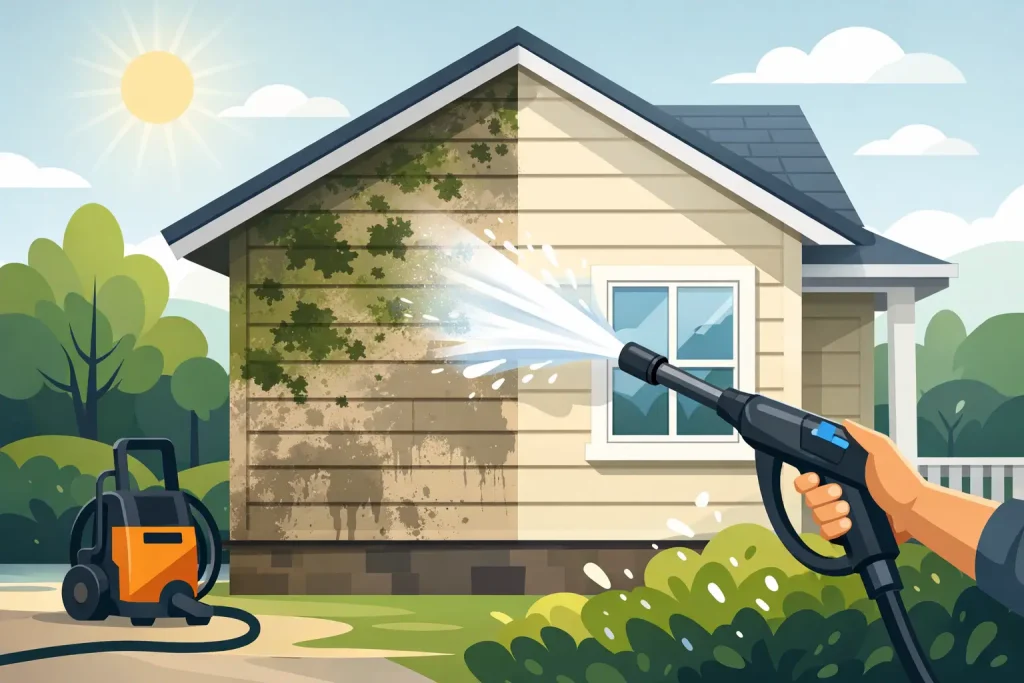
Algae and mildew are common across Atlanta homes and commercial buildings, particularly on north-facing walls, shaded patios, fences, and concrete. It may begin as a faint green or dark film, but it can spread quickly when moisture remains on the surface.
Cleaning these areas early improves appearance and helps reduce slip hazards on sidewalks, stairs, pool decks, and entry pads. The right cleaning method matters. Delicate siding, painted surfaces, and roofing should not be treated with the same pressure used for durable concrete.
Protect high-traffic concrete
Driveways, sidewalks, parking areas, and loading zones collect tire marks, oil drips, red clay, pollen, gum, and organic growth. These surfaces are durable, but they still benefit from professional cleaning that removes buildup without leaving uneven results or pushing contaminants into surrounding areas.
For commercial properties, clean concrete is especially valuable at the entrance. Customers notice the path from the parking lot to the door, and employees or tenants deserve walking surfaces that are clean and less slippery in wet weather.
Use the Right Cleaning Method for Each Surface
One of the biggest property maintenance mistakes is treating every exterior material with high pressure. More pressure is not always better. Used incorrectly, it can scar concrete, strip paint, force water behind siding, damage wood fibers, or shorten the life of roofing materials.
Soft washing is often the better choice for house washing and roof cleaning. This low-pressure approach combines surface-appropriate cleaning solutions with a controlled rinse to remove algae, mildew, dirt, and discoloration. It is designed to clean thoroughly while protecting the surface underneath.
House washing can refresh vinyl, painted siding, brick, stucco, trim, and soffits when performed with the proper technique. Roof washing requires even more care. Black roof streaks are commonly caused by organic growth, and blasting shingles with high pressure can damage granules and create unnecessary risk. Low-pressure roof cleaning is the safer option for many residential roofs.
Decks and fences need a different level of attention. Wood can be easily damaged by excessive pressure, especially if it is older, weathered, or already showing raised grain. A professional should assess the material, buildup, and finish before selecting the cleaning approach. The same principle applies to pavers, retaining walls, and decorative concrete.
Create a Schedule That Fits Your Property
There is no single maintenance schedule that works for every Atlanta property. Tree coverage, shade, traffic volume, nearby construction, landscaping, and the type of exterior materials all affect how quickly buildup returns. Still, a simple routine helps prevent tasks from being overlooked.
- Monthly: Check for standing water, visible algae, litter, loose debris, and slippery walking surfaces.
- Seasonally: Inspect gutters, downspouts, rooflines, decks, fences, and drainage areas, especially after heavy storms.
- Annually: Plan professional house washing, concrete cleaning, or exterior cleaning based on the property’s condition and exposure.
- As needed: Schedule roof washing, oil stain treatment, gutter cleaning, or sidewalk cleaning when visible buildup or safety concerns appear.
Properties with dense tree cover or persistent shade may need more frequent service. A retail storefront with high foot traffic may also need sidewalk and entry cleaning more often than a private residence. The best schedule is one that keeps problems controlled rather than reacting after they become obvious.
Why Professional Exterior Care Makes a Difference
Many maintenance tasks appear straightforward until equipment, safety, and surface protection are involved. Ladders, roofs, second-story siding, chemical handling, and high-pressure equipment all carry risks. Professional service brings the training, equipment, and attention to detail needed to complete the work safely.
A qualified exterior cleaning company should evaluate the surface before starting, use appropriate pressure levels, protect surrounding landscaping, and leave the work area clean. Licensed and insured service also gives owners added confidence when work is being performed around their home, business, tenants, or customers.
Capital City Power Washing provides exterior cleaning solutions for homeowners, commercial property owners, and property managers throughout Atlanta and surrounding counties. From house washing and low-pressure roof cleaning to driveway, gutter, fence, deck, sidewalk, and concrete cleaning, professional care can restore the surfaces that shape a property’s first impression.
Give Small Problems Attention Before They Grow
Property maintenance works best when it becomes part of how you care for the property, not just a task reserved for major stains or special occasions. Clean gutters protect drainage. Clean roofs and siding reduce visible organic growth. Clean concrete creates a safer, more welcoming path to the front door.
If an exterior surface is beginning to look dark, green, streaked, or slippery, it is a good time to address it. Timely, surface-appropriate cleaning helps your property stay protected, presentable, and ready to make the right impression.