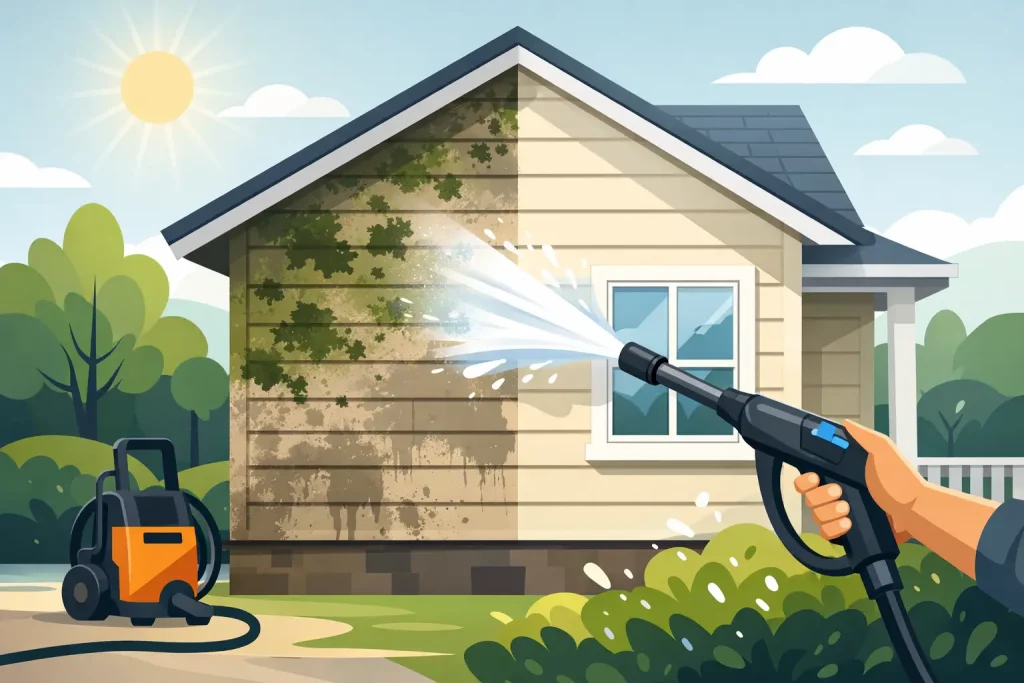
Green staining on siding, dark roof streaks, and slippery concrete often begin in the same place: a damp surface that does not get enough sun or airflow. The best ways to prevent algae are not complicated, but they do require consistent attention to drainage, shade, debris, and safe exterior cleaning. For Atlanta-area properties, where humidity, rain, and tree cover are common, a proactive plan protects curb appeal and helps exterior materials stay cleaner longer.
Algae growth does not always mean a property has been neglected. Spores travel through the air and settle on roofs, siding, decks, fences, sidewalks, and driveways. Once moisture, organic debris, and shade create the right conditions, stains can spread quickly. The goal is not to promise a permanently algae-free exterior. The goal is to remove the conditions that allow buildup to take hold and schedule professional cleaning before stains become a larger maintenance issue.
The Best Ways to Prevent Algae Start With Moisture Control
Water management is the foundation of algae prevention. Exterior surfaces that remain wet after rain are much more likely to develop green, black, or dark gray organic staining. Start by checking that gutters and downspouts are clear, securely attached, and directing water away from the house or building.
Clogged gutters can overflow onto siding, fascia, walkways, and landscaping. That repeated runoff creates damp streaks and keeps nearby surfaces wet. Downspouts should move water away from the foundation and should not empty directly onto a driveway, patio, or sidewalk where puddling occurs.
Pay attention to areas where water collects after a storm. Low spots in concrete, deck boards with poor drainage, and walkways beside dense landscaping can all hold moisture long after the rest of the property has dried. Improving drainage may involve extending a downspout, correcting a grading issue, or clearing debris from drainage channels. The right solution depends on the surface and the source of the water, but the principle is simple: surfaces dry faster when water has somewhere to go.
Reduce Shade and Organic Debris
Atlanta’s mature trees add beauty and value to a property, but branches and leaf cover can also create ideal algae conditions. Heavy shade slows drying, while falling leaves, pollen, pine needles, and small branches provide organic material that holds moisture against exterior surfaces.
Trim branches that hang over the roof or press against siding, provided the work can be done safely and without damaging the tree. Better airflow and more sunlight can make a noticeable difference on the north side of a home, beneath overhangs, and around decks or fences. Keep a reasonable clearance between vegetation and exterior walls so shrubs do not trap dampness against the structure.
Roof valleys, gutters, deck corners, and the edges of patios deserve special attention. Debris tends to settle in these locations, especially after storms. Leaving it in place can lead to staining, blocked drainage, and premature wear. A simple seasonal cleanup is far easier than allowing wet debris to sit for months.
Clean Surfaces Before Growth Becomes Embedded
Routine cleaning removes the spores, grime, and organic film that algae uses to establish itself. Waiting until a surface looks heavily stained can make the job more difficult and may require more intensive treatment. Early action protects the clean appearance of the property and helps preserve the surface beneath it.
Different materials require different methods. Vinyl siding, painted surfaces, and many roof materials should be cleaned with a controlled soft washing process rather than aggressive pressure. Soft washing uses appropriate cleaning solutions and low-pressure application to break down organic growth without forcing water behind siding, stripping paint, or damaging shingles.
Concrete, sidewalks, and driveways can often tolerate more pressure than a roof or delicate siding, but even these surfaces need a surface-appropriate approach. Excessive pressure can leave visible lines, expose aggregate, damage aging concrete, or create uneven results. Deck cleaning also requires care, since too much pressure can scar wood fibers and shorten the life of the finish.
A professional cleaning plan considers the material, the age and condition of the surface, the severity of staining, and nearby landscaping. That attention to detail matters because a one-size-fits-all approach can solve the appearance problem while creating a more expensive repair problem.
Keep Gutters, Roofs, and Siding Working Together
Algae prevention is more effective when you view the exterior as a connected system. A blocked gutter affects the roof edge, which affects siding and trim below it. A leaking downspout can stain the wall, saturate landscaping, and leave a slippery patch on the sidewalk. Addressing only the visible stain may not stop it from returning.
Roof staining deserves particular care. Dark streaks are often associated with moisture-loving organisms and can be more visible on lighter shingles. Homeowners may be tempted to blast them away with a pressure washer, but high-pressure roof cleaning can damage shingles, remove protective granules, and create leaks. Low-pressure roof washing is the safer choice when performed with the right equipment and cleaning process.
If algae repeatedly appears in the same area of siding, inspect the location after rainfall. Look for overflowing gutters, a loose downspout connection, sprinkler overspray, dense shrubs, or a roofline that channels water onto that section. Correcting the cause gives the cleaning results a better chance of lasting.
Use Landscaping and Irrigation Wisely
Landscaping can either support a cleaner exterior or contribute to ongoing staining. Mulch beds, shrubs, and groundcover should be kept from pressing directly against siding, fences, and deck supports. Plants need room for airflow, and exterior surfaces need room to dry.
Check sprinkler heads regularly. Irrigation that repeatedly sprays siding, fences, concrete, or a deck creates the same moisture problem as poor drainage. Adjust the spray pattern so water reaches the landscape instead of the building. Morning watering is generally more practical than evening watering because it gives surrounding surfaces more time to dry in daylight.
For commercial properties, this is especially relevant near storefronts, entry walks, dumpster pads, and tenant-facing sidewalks. Algae growth can make a well-maintained property look neglected, but it can also create slippery walking conditions. Keeping irrigation under control and scheduling routine exterior cleaning helps protect both appearance and day-to-day safety.
Set a Maintenance Schedule That Fits Your Property
There is no single cleaning schedule that works for every home or commercial property. A sunny property with limited tree cover may need less frequent service than a shaded lot surrounded by mature oaks and pines. Buildings with heavy foot traffic, irrigation systems, or drainage challenges may also need more attention.
A practical routine includes checking the exterior after major storm seasons and before stains become widespread. During each walkthrough, look for these common warning signs:
- Green film or dark streaks on siding, roofing, fences, or concrete
- Leaves and pine needles collecting in gutters, roof valleys, or deck corners
- Water pooling near sidewalks, patios, driveways, or building foundations
- Shrubs and branches reducing airflow around exterior surfaces
For many Atlanta-area properties, professional washing every year or two is a sensible baseline. Heavily shaded roofs, north-facing walls, concrete walkways, and commercial entrances may benefit from more frequent service. The best timing depends on how quickly organic buildup returns, not on a calendar alone.
Avoid Shortcuts That Can Damage Surfaces
Bleach-heavy mixtures, untested chemical products, and rental pressure washers can create avoidable risks. The wrong solution may discolor siding, harm landscaping, corrode metal fixtures, or leave uneven results. The wrong pressure setting can gouge wood, etch concrete, tear screens, or compromise roofing materials.
DIY cleaning may be reasonable for light debris removal at ground level, but roof work, high exterior walls, steep driveways, and heavily stained surfaces are better left to trained professionals. Safe cleaning involves more than operating equipment. It requires choosing the correct cleaning solution, protecting nearby plants, managing runoff, and adjusting the method to the surface.
Capital City Power Washing provides surface-appropriate exterior cleaning for homeowners, property managers, and commercial properties throughout Atlanta and surrounding counties. Professional soft washing, low-pressure roof cleaning, gutter cleaning, and concrete cleaning can remove existing organic buildup while helping you maintain a cleaner, more polished property.
A clean exterior starts with small habits: keep water moving, clear away debris, give surfaces room to dry, and address stains early. When algae begins to appear, prompt, professional care can restore the appearance of the property and help prevent a minor stain from becoming the next major eyesore.