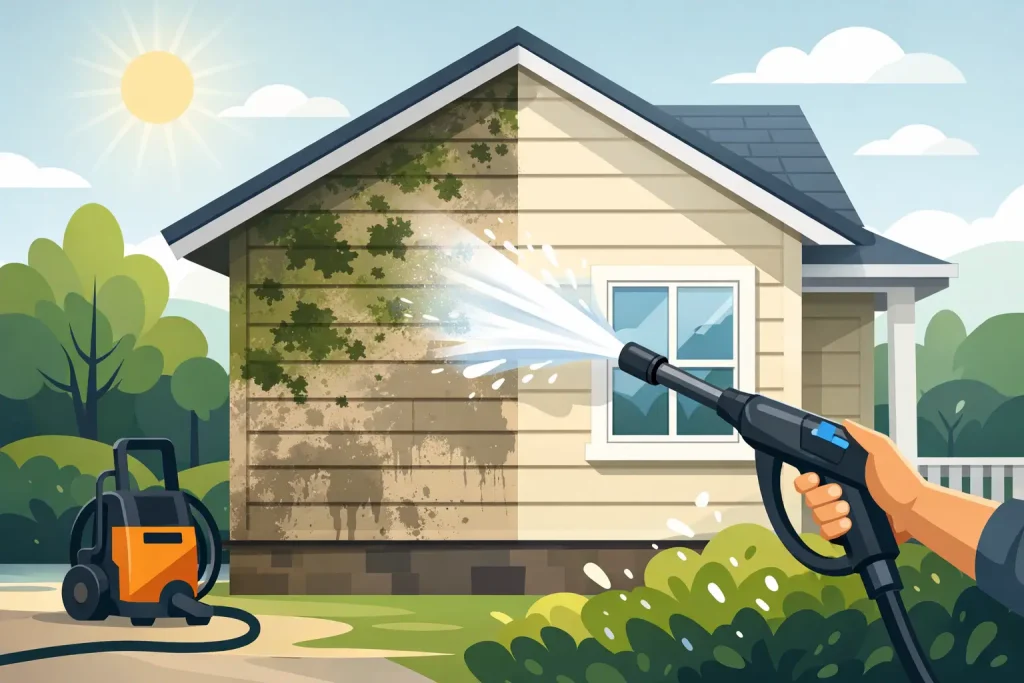
Green streaks on siding can make an otherwise well-kept Atlanta home or commercial property look neglected fast. Knowing how to remove siding algae the right way matters because aggressive pressure, harsh mixing, or missed rinse areas can damage siding, landscaping, and nearby surfaces. The goal is not simply to make the exterior look clean for a day. It is to remove the organic growth safely and help keep it from returning.
Algae commonly appears on the shaded or moisture-prone sides of a building, especially after humid weather and heavy pollen seasons. It may look green, dark green, or nearly black, and it often spreads in streaks beneath soffits, around gutters, and near landscaping. With the right cleaning method, siding can be restored without the risks of high-pressure washing.
Why algae grows on siding
Algae needs moisture, shade, and a surface where it can hold on. Georgia’s humidity creates ideal conditions, particularly on north-facing walls, areas blocked by trees, and sections where gutters overflow or sprinklers regularly hit the house.
Pollen, dust, and airborne debris also give algae something to feed on. Vinyl siding is especially prone to visible green buildup, but algae can develop on painted wood, fiber cement, brick, stucco, and other exterior materials. The right approach depends on the surface. What works safely on vinyl may not be appropriate for older painted wood or delicate stucco.
Algae is not always a structural emergency, but ignoring it can lead to more stubborn staining over time. It also holds moisture against the exterior, which is never ideal around seams, trim, caulking, or aging paint. For rental properties, retail storefronts, and office buildings, visible algae can also affect curb appeal before tenants or customers ever walk inside.
How to remove siding algae safely
The safest method for most homes is soft washing. Soft washing uses a surface-appropriate cleaning solution and low water pressure to treat and rinse away algae. Unlike forceful pressure washing, it does not rely on blasting the growth off the wall.
Before cleaning, protect the surrounding area. Move patio furniture, cover or wet sensitive plants as needed, close windows and doors, and make sure outdoor electrical outlets are protected. If you are working near a deck, painted trim, or windows, take extra care to control runoff and avoid leaving cleaning solution sitting on those surfaces.
Apply a siding-safe algae cleaner according to the product directions. Many professional-grade solutions are designed to kill organic growth rather than merely brighten its appearance. Let the solution dwell for the recommended amount of time, but do not allow it to dry on the siding. On a warm, sunny day, smaller sections are easier to manage.
Once the algae has been treated, rinse thoroughly from the top down using low pressure. A garden hose with a gentle spray setting is often enough for a small, accessible area. If a pressure washer is used, choose a low-pressure setting and a wide fan tip. Keep a safe distance from the siding, aim downward or straight on rather than upward beneath the panels, and avoid concentrating the stream in one place.
The algae should release with minimal force after proper treatment. If you find yourself trying to scrub hard or increase pressure, stop and reassess. More force is not usually the answer. The surface may need additional dwell time, a second application, or professional cleaning.
Do not force water behind the siding
Vinyl siding is designed to shed rain, not withstand water driven upward behind its panels. Spraying from below can push water behind the siding, where it may reach the wall system or insulation. High pressure can also crack vinyl, loosen panels, strip paint, scar wood, and damage window screens or seals.
This is why experienced exterior cleaning professionals use controlled, low-pressure methods. The cleaner does the work. The rinse simply carries away the treated growth and residue.
Choose the cleaning method for your siding material
Vinyl siding generally responds well to a properly diluted soft-wash solution followed by a low-pressure rinse. Avoid abrasive pads and narrow, high-impact spray tips. They can leave dull spots, scratches, or visible lines in the finish.
Painted wood siding requires more caution. Older paint can chip or peel, and excessive moisture may find its way into cracks or unsealed edges. Test a small, less visible area first. If the paint is already failing, cleaning may reveal the need for repainting rather than cause the problem, but that is still a consideration before starting.
Fiber cement is durable, yet it should still be cleaned gently. Follow the manufacturer’s care guidance when available, and do not use pressure that could affect caulked joints, paint, or trim. Stucco and EIFS need special attention because forceful water can damage the texture or drive moisture into vulnerable areas. Brick can tolerate more cleaning than some siding materials, but the mortar, nearby trim, and drainage conditions still matter.
For large buildings or mixed-material exteriors, professional evaluation is often the better choice. A property manager may be dealing with siding, masonry, awnings, sidewalks, and entryways at the same time. Each surface needs its own cleaning approach to achieve a consistent result without creating damage elsewhere.
Common mistakes that make algae problems worse
Using maximum pressure is the most common mistake. The siding may look cleaner immediately, but damaged panels, etched surfaces, water intrusion, and stripped paint can turn a routine maintenance task into an expensive repair.
Another mistake is treating only the most visible green spots. Algae often extends beyond the obvious staining. A partial cleaning can leave uneven results and allow the growth to return quickly from surrounding untreated areas.
Homeowners should also avoid mixing cleaning products. Combining chemicals can create harmful fumes or reduce effectiveness. Use one product at a time, follow its label instructions, and wear appropriate gloves and eye protection. Never assume a stronger concentration will produce a better result.
Finally, do not overlook the moisture source. If algae keeps returning in the same location, inspect the area for clogged gutters, downspout discharge, overgrown shrubs, leaking fixtures, or sprinkler overspray. Cleaning the siding without correcting excess moisture only solves part of the problem.
How to keep siding algae from returning
A clean exterior stays cleaner longer when water can move away from the building. Keep gutters clear, make sure downspouts direct water away from the foundation, and trim branches that keep exterior walls shaded and damp. Do not allow shrubs or vines to grow tightly against the siding, since they trap moisture and limit airflow.
If irrigation is hitting the home, adjust the sprinkler pattern. This simple change can make a noticeable difference on the side of the house where algae repeatedly appears. Regularly rinsing heavy pollen from problem areas can also help, especially during Atlanta’s high-pollen season.
Most properties benefit from periodic house washing before buildup becomes heavy. The ideal frequency depends on tree cover, shade, drainage, traffic exposure, and the type of siding. A sunny home with good drainage may only need occasional maintenance, while a shaded property beneath mature trees may need professional cleaning more often.
When professional siding cleaning is the safer choice
Do-it-yourself cleaning can work for small areas that are easy to reach from the ground. It becomes less practical when algae covers multiple sides of the property, the building has second-story areas, landscaping is extensive, or the siding material requires specialized care.
Professional service is also a smart choice when stains are dark, widespread, or accompanied by mildew, mold-like growth, gutter overflow marks, or roof streaking. A trained team can identify the surface, select the proper solution, protect plants and exterior features, and use controlled low-pressure equipment for an even finish.
Capital City Power Washing provides house washing throughout the Atlanta area and surrounding counties using surface-appropriate methods that focus on clean results and protection. For homeowners and property managers, that means less guesswork, no rental-equipment learning curve, and a refreshed exterior handled with attention to detail.
A clean siding surface does more than improve photos, curb appeal, or first impressions. It gives you a chance to address moisture issues early and keep the property looking cared for. When algae starts to spread, treat it gently, rinse it thoroughly, and choose professional help when the job calls for safer hands and better equipment.