Atlanta rainstorms can expose a gutter problem in minutes. Water spills over the edge, streaks the siding, pounds the landscaping, and pools near the foundation instead of moving safely away from the building. That is why gutter cleaning necessity is more than a routine chore. It is practical protection for your home, commercial property, and the surfaces that keep it looking its best.
Leaves, pine needles, roof grit, small branches, and storm debris build up faster than many property owners expect. Once the gutter channel or downspout is blocked, the entire drainage system stops doing the job it was designed to do. Professional cleaning restores water flow before a manageable maintenance issue becomes an expensive repair.
Why gutter cleaning is a necessity, not an optional task
Gutters have one clear purpose: collect rainwater from the roofline and direct it away from the structure. When they are clear, they help protect roofing, siding, fascia boards, foundations, walkways, and landscaping. When they are clogged, rainwater finds another route.
Overflowing water can run behind the gutter and soak the fascia and soffit. Over time, repeated moisture exposure may contribute to wood rot, peeling paint, stains, and damage around the roof edge. A full gutter is also heavy. Wet leaves and standing water add weight that can pull gutters away from the home or cause sections to sag.
The risk does not stop at the roofline. Water that consistently falls beside a foundation can saturate the soil, create muddy areas, and increase pressure against below-grade walls. Not every overflow leads to foundation damage, but allowing the issue to repeat through Atlanta’s rainy seasons is a gamble most property owners do not need to take.
For commercial buildings, clogged gutters can also affect appearance and safety. Water spilling onto entry paths can leave slippery areas, stain exterior walls, and create an unprofessional first impression for tenants, customers, and visitors.
The costly problems clogged gutters can cause
A clogged gutter rarely announces itself with a single dramatic failure. More often, the signs begin small: a dark line on siding, mulch washed out of a flower bed, water dripping from a seam, or a downspout that barely releases water during a storm. Addressing those warning signs early is usually far easier than repairing the damage left behind.
Roof-edge and siding damage
When debris traps moisture against the roof edge, the materials near the gutter stay wet longer than they should. This can encourage algae, mildew, and deterioration on painted or wooden surfaces. Water that backs up beneath shingles may create roofing concerns, particularly where aging materials or prior damage are already present.
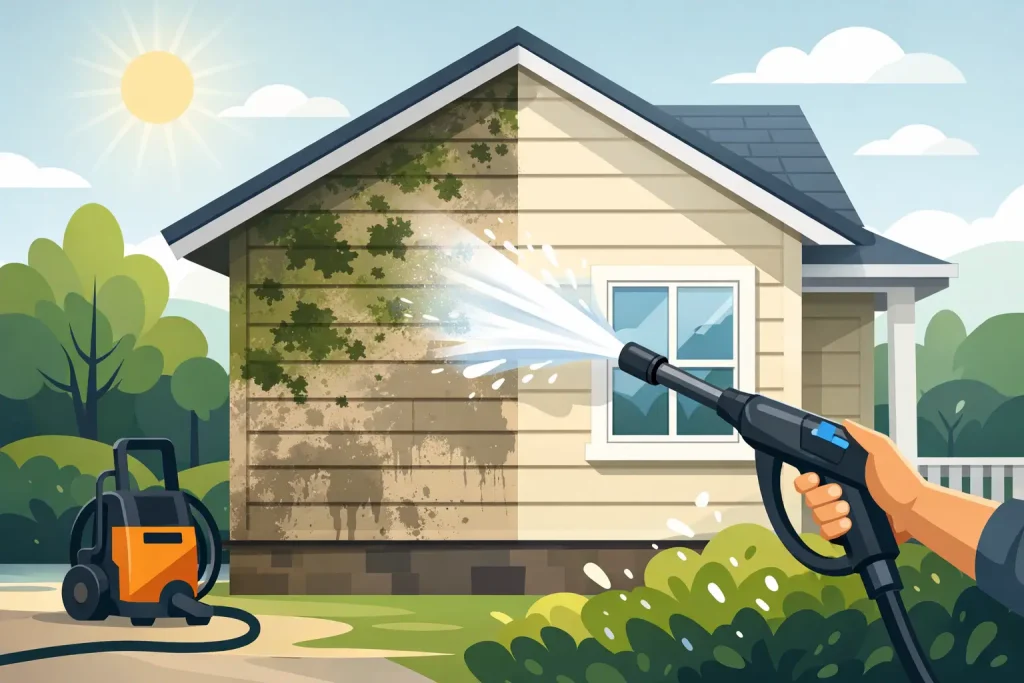
Overflow can also leave vertical dirt and water stains on siding, brick, stucco, and trim. Cleaning the gutters solves the drainage problem, while a carefully selected exterior wash can restore the clean appearance that runoff leaves behind.
Foundation and landscape issues
Downspouts should carry water away from the building. If a downspout is blocked or disconnected, rain may empty right beside the foundation. In clay-heavy soils common across metro Atlanta, moisture changes can be especially hard on the ground around a structure.
Landscaping also takes the hit. Overflow can carve channels through mulch, flatten plants, expose roots, and wash soil onto driveways or sidewalks. A clear drainage path helps preserve the work and expense invested in curb appeal.
Pest activity and unwanted growth
Wet leaves create a sheltered environment for insects and other pests. Standing water can also attract mosquitoes during warmer months. Gutters are not the only factor in pest activity, but removing damp organic buildup eliminates one avoidable hiding place near the roofline.
Moisture and shade can support algae and mildew growth on nearby surfaces as well. This is especially noticeable on north-facing areas, where exterior materials receive less direct sunlight and stay damp longer.
How often should Atlanta properties have gutters cleaned?
Most homes benefit from gutter cleaning at least twice each year: once after the heaviest fall leaf drop and again in spring. Properties with mature trees, pine trees, heavy roof valleys, or frequent storm debris may need more attention. A home surrounded by little tree cover may need less frequent service, but it should still be inspected regularly.
Timing matters because Atlanta weather can be unpredictable. A gutter that appears mostly clear in dry weather may reveal a downspout blockage only when a hard rain arrives. Scheduling service before the wettest stretches of the year gives the system a better chance to perform when it matters.
Commercial properties often need a schedule based on their landscape, roof layout, tenant traffic, and maintenance expectations. Retail centers, offices, and multifamily properties should not wait for visible overflow at entrances or parking areas. Planned maintenance is more reliable and easier to budget than emergency cleanup after a storm.
Signs your gutters need attention now
You do not have to climb a ladder to spot every gutter issue. During or shortly after rainfall, look for water pouring over the gutter edge, sagging sections, drips from seams, or a downspout with little to no discharge. On dry days, visible plants growing from the gutter, debris hanging over the edge, and dark water marks on siding are clear signs that cleaning is overdue.
Pay attention to what is happening at ground level, too. Eroded mulch, puddles near the home, splashing dirt on exterior walls, and water-stained concrete can all point to poor roof drainage. These symptoms can have more than one cause, but clogged gutters should be one of the first areas checked.
If gutters overflow from only one location, the problem may be concentrated in a single downspout or roof valley. If water spills from several sections, a full cleaning and drainage inspection are often the smarter approach.
Why professional gutter cleaning is the safer choice
Gutter cleaning looks simple from the ground, but working at roof height brings real risks. Uneven ground, slick ladders, electrical lines, steep roof pitches, and loose gutter sections can turn a basic task into a dangerous one. The job also requires more than removing visible leaves. Downspouts need to be checked for obstructions, and the system should be inspected for loose hardware, leaks, and drainage concerns.
A professional service provides the right equipment, safe working practices, and a detail-focused approach. Rather than blasting debris around with excessive pressure, the goal is to remove buildup carefully, clear the drainage path, and protect the roofline and surrounding surfaces. The right method depends on the property, the gutter condition, and the type of debris present.
At Capital City Power Washing, gutter cleaning is handled as part of a complete exterior-care approach. Clear gutters work better alongside clean rooflines, siding, concrete, and walkways, helping the entire property look maintained and ready for the next season.
Gutter guards help, but they do not eliminate maintenance
Gutter guards can reduce the amount of large debris entering the gutter channel, and they may be useful for some properties. However, they are not a guarantee against clogs. Pine needles, roof grit, seed pods, and fine debris can collect on top of guards or enter through small openings. Water can also run over the guard if buildup blocks its surface.
Whether your property has guards or open gutters, periodic inspection still matters. The best maintenance plan depends on nearby trees, roof design, local weather exposure, and how easily debris gathers in your specific gutter system.
Protect the property before the next storm
Clean gutters do not just improve the look of a roofline. They give rainwater a controlled path away from the building, helping protect the exterior areas you depend on every day. If you have noticed overflow, staining, sagging, or drainage problems, arranging service before the next heavy rain is a practical step toward a cleaner, better-protected property.