Those black streaks across an Atlanta roof are more than a curb appeal issue. They often point to algae, moisture-related growth, and debris holding dampness against the surface. When weighing DIY versus professional roof cleaning, the right choice comes down to more than the price of a cleaner and a free Saturday. It involves fall risk, the age and material of your roof, the cleaning method used, and the cost of correcting accidental damage.
For some homeowners, a limited DIY approach can make sense. For many properties, especially homes with steep slopes, aging shingles, widespread staining, or delicate roofing materials, professional roof washing is the safer way to get a clean result without creating a much larger repair bill.
Why Roof Stains Deserve Attention
Georgia’s warm, humid conditions create an ideal environment for algae, mildew, moss, and lichen. The dark stains commonly seen on asphalt shingles are often algae that feeds on the limestone filler in the shingles. Shaded roof sections, areas beneath overhanging trees, and slopes with poor airflow usually show the problem first.
A stained roof does not automatically mean the roof is failing. Still, buildup should not be ignored. Moss and lichen can hold moisture against roofing materials, while packed leaves and branches can block drainage paths. Beyond appearance, regular attention helps property owners spot loose flashing, damaged shingles, clogged gutters, or tree limbs rubbing against the roof before those issues become more expensive.
DIY Versus Professional Roof Cleaning: The Real Differences
The biggest difference is not simply who holds the hose. It is whether the cleaning process matches the roof material, level of buildup, and safety requirements of the job.
Cost: Upfront Savings vs. Total Cost
DIY roof cleaning may appear less expensive at first. A homeowner may need cleaning solution, a garden sprayer, protective gear, a ladder, and possibly a rental or purchase of equipment. For a small, low-slope roof with light staining, those supplies can cost less than hiring a service.
The calculation changes quickly when specialty equipment, repeated product applications, or roof repairs enter the picture. A damaged shingle surface, broken tile, bent gutter, or landscaping affected by runoff can erase the initial savings. There is also the value of time. Cleaning a roof carefully is not a quick rinse-and-go task, especially when setup, plant protection, application, cleanup, and safe ladder work are considered.
Professional service is a larger upfront investment, but it includes trained labor, appropriate equipment, and a method selected to protect the surface. It also gives homeowners a clearer expectation for the scope of work and the final result.
Safety: The Risk Is Higher Than It Looks
Roof work creates two separate hazards: falling and damaging the roof while walking on it. Even a one-story home can be dangerous when moisture, cleaning solution, algae, or wet leaves make the surface slick. Steep pitches, multi-story homes, skylights, and uneven ground around the house increase that risk.
A professional team is equipped to manage ladder placement, controlled application, and safe work practices. Just as important, experienced roof cleaners know when they do not need to walk across the roof at all. Many jobs can be completed from ladders, lift equipment, or other carefully planned access points, reducing unnecessary foot traffic on shingles or tiles.
If you have any concern about your ability to work safely at height, the DIY decision should end there. A clean roof is never worth a serious injury.
Cleaning Method: Pressure Is Not the Answer
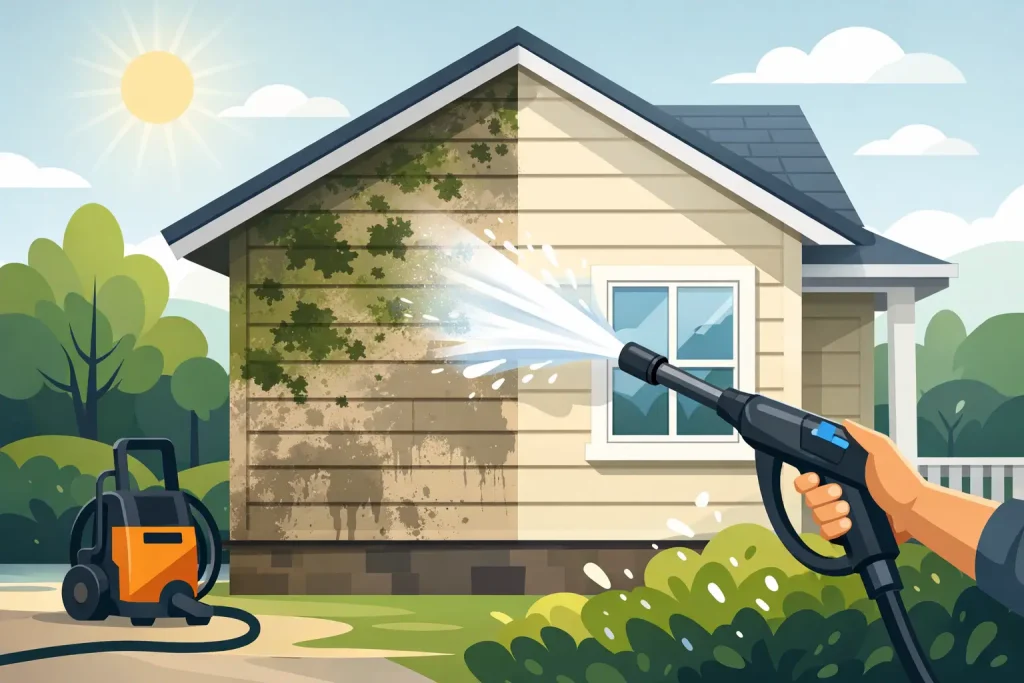
One of the most common DIY mistakes is using a pressure washer on roofing. High pressure can strip granules from asphalt shingles, lift shingle edges, force water beneath the roofing system, and damage flashing. It may make stains disappear quickly, but it can shorten the useful life of the roof.
Proper roof cleaning typically relies on a low-pressure soft washing process and surface-appropriate cleaning solutions. The solution is applied in a controlled manner to treat algae and organic buildup rather than blasting the surface. It works with the material instead of against it.
This distinction matters for every roof type. Asphalt shingles, clay tile, concrete tile, metal, cedar, and slate all have different care requirements. A method that is safe for one surface may be harmful to another. Before any cleaning begins, it is wise to review the roof manufacturer’s guidance and account for the roof’s condition.
Results: Removing Growth, Not Just Hiding It
A garden hose may rinse away loose debris, but it usually will not solve established algae or lichen staining. Brushing can be equally problematic when it is too aggressive, because it can wear away protective shingle granules or disturb fragile materials.
Professional roof cleaning focuses on treating the source of staining. Some discoloration may lighten immediately, while heavier organic growth may release gradually after treatment. That is normal and often preferable to using force that damages the roof. A reliable provider will explain what results to expect, what the process involves, and whether a heavily affected area needs follow-up attention.
When DIY Roof Cleaning May Be Reasonable
DIY can be a practical option when the task is limited and the risk is low. For example, a homeowner may safely clear loose leaves from a reachable gutter area, trim back branches that drop debris on the roof, or use a manufacturer-approved treatment from the ground on a low, accessible section.
The key word is limited. Do not climb onto a wet roof, use high-pressure equipment, mix cleaning chemicals without clear directions, or attempt to remove thick moss by scraping. Avoid working alone, and protect nearby plants from any cleaning solution used. If the roof is older, has visible damage, or has a slope that makes you hesitate, schedule an inspection or professional cleaning instead.
When Professional Roof Washing Is the Better Choice
Professional cleaning is strongly recommended for steep, tall, heavily stained, or difficult-to-access roofs. It is also the better choice for tile, metal, cedar, slate, or roofs with existing wear. These materials can be costly to repair and require a careful approach.
Commercial property owners and managers have additional reasons to use a qualified service. Roof cleaning may need to be coordinated around tenants, customers, parking areas, landscaping, and building access. A professional crew can plan the work to reduce disruption and maintain the clean, cared-for appearance that tenants and visitors notice.
For Atlanta-area homes and businesses, Capital City Power Washing uses low-pressure roof cleaning methods designed to remove organic buildup while protecting the roofing surface and surrounding property. Licensed and insured service matters when the job requires expertise, attention to detail, and a dependable crew on site.
Questions to Ask Before Hiring a Roof Cleaner
Not all exterior cleaning companies use the same process. Before accepting a quote, ask whether the company uses soft washing or high pressure on the roof, what solution will be applied, and how plants and exterior surfaces will be protected. Confirm that the provider is licensed and insured, and ask whether the team has experience with your specific roofing material.
You should also ask what is included in the quote. A clear estimate should identify the areas being cleaned and explain whether gutter debris removal, rinsing, or post-service cleanup is part of the service. Clear communication before the work begins is a good sign that the company takes property protection and customer care seriously.
Protecting a Clean Roof Between Services
Roof cleaning lasts longer when the conditions feeding algae and debris are managed. Keep gutters flowing, remove branches that rub against the roof, and trim back dense limbs that keep sections of the roof shaded and damp. After storms, a visual check from the ground can reveal fallen limbs, piles of leaves, or unusual staining before they become larger maintenance concerns.
The best choice between DIY and professional roof cleaning is the one that protects your safety and your roof first. If the job requires climbing, specialized treatment, or more than light maintenance, choosing experienced help is a practical way to preserve your property and enjoy the clean result with confidence.