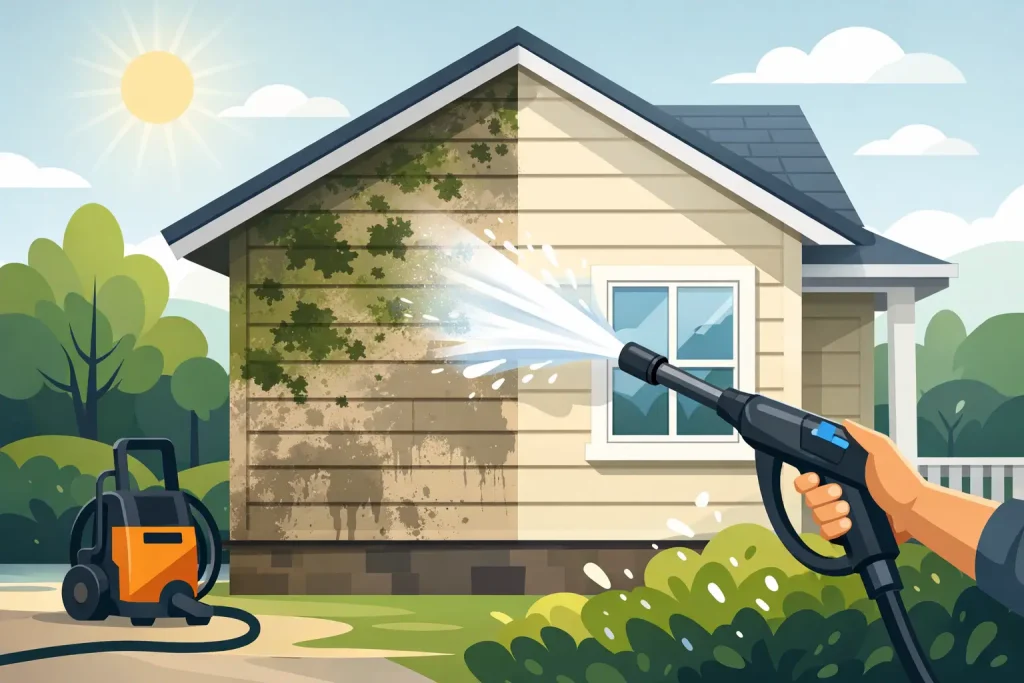
A deck can go from a favorite gathering place to a slippery, stained eyesore faster than many property owners expect. In Atlanta’s humid climate, moisture, pollen, algae, mildew, and fallen leaves can settle into deck boards and create buildup that affects both appearance and safety. This deck cleaning guide explains how to clean your deck carefully, when pressure washing is appropriate, and when professional service is the better way to protect your investment.
Why Routine Deck Cleaning Matters
Deck cleaning is more than a curb appeal project. Dark green or black growth often signals algae, mildew, or mold-like organic buildup that retains moisture against the surface. On wood decks, that moisture can contribute to staining, splintering, and premature deterioration. On composite decking, it can leave stubborn discoloration and make the walking surface slick after rain.
A clean deck also makes maintenance easier. When dirt and biological growth are removed, it is simpler to spot loose fasteners, cracked boards, failing sealant, and areas where water is not draining properly. Addressing these concerns early can help prevent a smaller maintenance issue from becoming a costly repair.
For many Atlanta-area homes, a thorough deck cleaning once a year is a practical starting point. Decks beneath heavy tree cover, near pools, or in consistently shaded areas may need attention more often. The right schedule depends on the deck material, local exposure, and how quickly buildup returns.
Start by Identifying Your Deck Material
The cleaning method should always match the material. A pressure setting that is safe for concrete can permanently scar a wood deck, and a cleaner that works well on one composite product may not be recommended for another.
Wood Decks Need a Gentle Approach
Pressure-treated pine, cedar, and other natural woods have fibers that can be raised, gouged, or etched when too much pressure is used. Older boards are especially vulnerable. The goal is to lift away surface contaminants without forcing water deep into the wood or stripping away sound material.
For most wood decks, a quality deck cleaner and low-pressure rinse are safer than aggressive pressure. If the deck is weathered or has visible splintering, cleaning should be even more controlled. After the surface has dried completely, it may be ready for sanding, staining, or sealing, depending on its condition.
Composite Decks Have Different Requirements
Composite boards are generally more resistant to rot and moisture than natural wood, but they still collect pollen, dirt, algae, and food spills. Many composite manufacturers allow low-pressure washing, but their care requirements can vary by product line and finish.
Avoid assuming that composite is maintenance-free. Use a cleaner suited to composite materials, rinse thoroughly, and keep the nozzle moving if low-pressure washing is used. Excessive pressure can leave marks, damage protective caps, or create uneven-looking areas that are difficult to correct.
Prepare the Area Before Cleaning
Good results begin before any cleaner or water reaches the deck. Preparation protects surrounding landscaping, prevents avoidable messes, and gives the cleaning solution a better chance to work evenly.
Before cleaning, remove furniture, planters, rugs, grills, and loose decorative items from the deck. Sweep away leaves, pine needles, dirt, and debris between boards. Cover sensitive plants if needed, and wet nearby landscaping before applying cleaning products. This helps reduce the chance of cleaners drying onto foliage.
Take a close look at the deck while it is clear. Check for raised nails, loose boards, soft spots, protruding screws, and damaged railings. Cleaning can reveal problems, but it should not be used to force water into areas that are already failing. If boards are unstable or visibly rotted, repairs should come before washing.
How to Clean a Deck Safely
The safest process is deliberate, not rushed. Cleaning solutions need time to loosen buildup, and rinsing should be controlled to avoid streaks or surface damage.
Apply the Right Cleaning Solution
Choose a deck cleaner made for the surface you have. A product designed to remove algae, mildew, and organic staining is often more effective than relying on high pressure alone. Using the appropriate solution allows the cleaning process to do the work while reducing the need for harsh blasting.
Apply cleaner in manageable sections so it does not dry before you rinse. Follow the product directions for dilution and dwell time. Never mix cleaning chemicals, and avoid using chlorine bleach as a catch-all solution. Bleach may affect nearby plants, alter wood color, and fail to address the underlying grime as evenly as a purpose-made exterior cleaner.
For stubborn areas, gently agitate the surface with a soft-to-medium bristle brush. Work in the direction of the boards when possible. The objective is to loosen embedded dirt, not aggressively scrub the finish away.
Rinse With Controlled Pressure
A garden hose with a strong spray nozzle may be enough for lightly soiled decks. For heavier buildup, low-pressure washing can be effective when handled correctly. Keep the nozzle a safe distance from the boards, use a wide fan tip, and make smooth, overlapping passes.
Never hold the spray in one spot. On wood, that is how visible lines and gouges happen. Avoid spraying upward beneath siding, railings, or deck boards, where water can be pushed into places it should not go.
If you are unsure of the correct pressure or nozzle, test a small, inconspicuous area first. A deck can be damaged in seconds, while correcting pressure marks may require sanding, refinishing, or board replacement.
Rinse Again and Let the Deck Dry
A complete rinse is essential. Cleaner residue can leave streaks, attract dirt, or interfere with stain and sealant adhesion. Check corners, board gaps, stairs, railings, and the perimeter where runoff may collect.
Allow the deck to dry fully before replacing furniture or applying any finish. Drying time changes with temperature, shade, humidity, and recent rainfall. In metro Atlanta, humid conditions can extend the process, especially on shaded decks with limited airflow.
Common Deck Cleaning Mistakes to Avoid
The biggest mistake is treating every exterior surface like concrete. High pressure may appear to produce quick results, but on a deck it can strip wood fibers, leave lap marks, and create a rougher surface that holds more dirt later. More pressure is not better when the surface is delicate.
Another common issue is letting cleaner dry on the boards. Work in smaller sections, particularly on warm or sunny days, and rinse before the solution dries. Skipping the pre-sweep can also turn loose debris into muddy residue that settles into cracks and gaps.
Finally, do not clean over a deck that needs structural repairs. Surface washing improves appearance, but it cannot repair rot, loose railings, or compromised framing. For rental properties and commercial outdoor areas, this distinction is especially important because safety concerns should be handled promptly.
When Professional Deck Cleaning Is Worth It
Professional deck cleaning is a smart choice when buildup is extensive, the deck material is uncertain, or the surface has not been cleaned in several years. It is also helpful when you are preparing to sell a home, welcoming tenants, opening a customer-facing patio, or planning to stain and seal the deck.
A trained exterior cleaning team can evaluate whether soft washing, low-pressure cleaning, or a combination of methods is best for the material and condition. The right equipment matters, but technique matters just as much. Surface-appropriate cleaning helps remove discoloration while protecting boards, railings, landscaping, and nearby siding.
Capital City Power Washing provides deck cleaning for homeowners and property managers throughout Atlanta and surrounding counties, with careful methods designed to deliver a visible transformation without a one-size-fits-all approach. Licensed, insured service and attention to detail give property owners confidence that the work will be completed responsibly.
Keep the Results Looking Better Longer
Once the deck is clean, simple habits can slow down future buildup. Sweep it regularly, clear leaves from board gaps, and move planters occasionally so moisture does not stay trapped underneath. Trim back overhanging branches where practical to improve sunlight and airflow.
For wood decks, maintain the stain or sealant on the schedule recommended for the product and the deck’s exposure. A properly maintained protective finish helps reduce water absorption and makes routine cleaning easier. Composite decks benefit from prompt spill cleanup and periodic washing, even if they do not require staining.
A clean deck should feel like an extension of your property, not another maintenance problem waiting to grow. With the right cleaning method and timely care, it can stay safer underfoot, look more inviting, and be ready for the people who use it most.