Black streaks on an Atlanta roof are rarely just a cosmetic problem. Our humid climate gives algae, mildew, moss, and lichen the moisture they need to spread across shingles and tile. When deciding between roof washing versus roof treatment, the right choice depends on what is growing, how established it is, and whether you need immediate visual improvement or long-term prevention.
A clean roof can improve curb appeal, support a well-maintained property appearance, and help you spot damaged shingles, flashing concerns, or clogged gutters sooner. But roof care is not a job for high pressure. The wrong method can loosen granules, crack delicate materials, force water beneath roofing components, and create an expensive repair issue.
What Is Roof Washing?
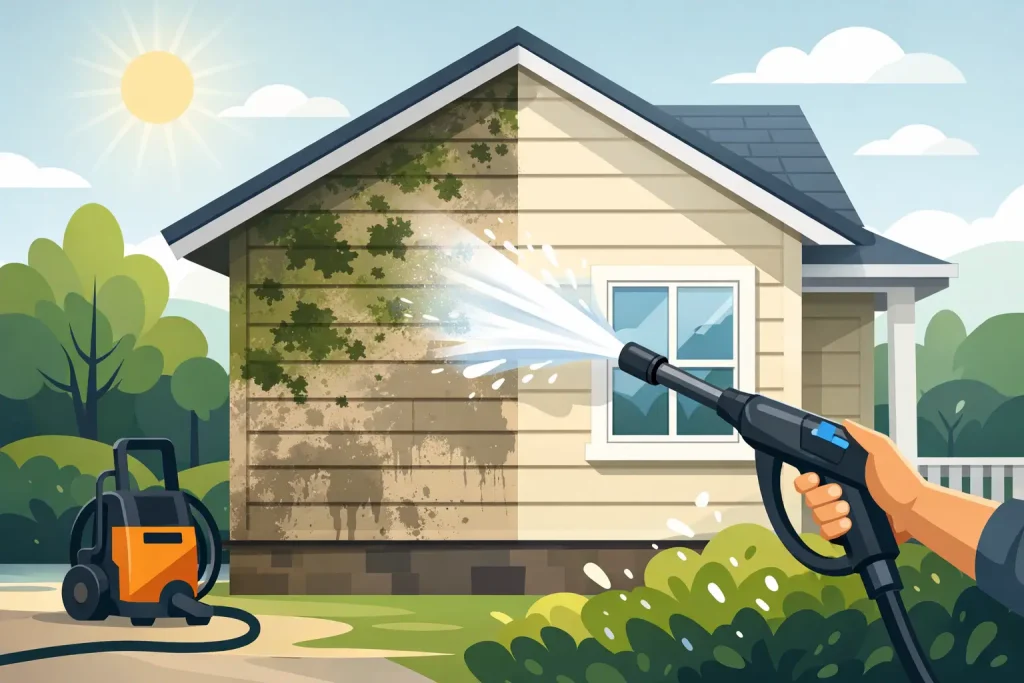
Roof washing is a professional cleaning service designed to remove visible organic buildup, dirt, pollen, and surface staining. For most asphalt shingle roofs, this means a soft-wash or low-pressure process rather than traditional pressure washing.
A trained technician applies a roof-appropriate cleaning solution that breaks down algae and other organic growth. After the solution has time to work, the roof is treated carefully according to the material, condition, and manufacturer guidance. The goal is to clean the roof without aggressive blasting or unnecessary abrasion.
For homeowners preparing to sell, commercial managers improving a tenant-facing property, or anyone tired of seeing dark stains from the street, roof washing offers the most noticeable immediate change. In many cases, algae staining lightens dramatically during service. Heavier growth may continue to release gradually after treatment rather than being scraped or pressured off.
Why soft washing matters
A roof is not a driveway. Concrete can handle cleaning methods that would be risky for shingles, cedar, clay tile, or older roofing materials. High pressure may remove more than dirt – it can strip protective shingle granules, disturb seals, and shorten the service life of the roof.
Professional roof washing uses controlled application, proper dwell time, and careful rinsing practices when appropriate. It also includes protecting nearby landscaping, siding, windows, and outdoor surfaces from overspray and runoff. That attention to detail is especially valuable on properties with established shrubs, landscaped beds, solar panels, or closely spaced neighboring homes.
What Is a Roof Treatment?
A roof treatment usually refers to applying a product that kills or inhibits algae, moss, mildew, or lichen. Unlike a full roof wash, a treatment may not remove all existing discoloration immediately. Its primary purpose is to address active biological growth and reduce the chance of fast regrowth.
The wording can be confusing because some roof washing services include a treatment as part of the cleaning process. Other companies use “treatment” to describe a lighter maintenance visit that applies a growth-control solution without a complete wash. That is why it is wise to ask what is included: visible stain removal, moss and lichen control, rinsing, cleanup, plant protection, and follow-up expectations.
A treatment can be a practical choice when the roof has early algae growth but is not heavily stained, or when a recently cleaned roof needs maintenance. It may also be appropriate for areas that stay shaded and damp, such as roof sections beneath mature trees or on north-facing slopes.
Roof Washing Versus Roof Treatment: The Key Difference
The simplest difference is the result you can expect right away. Roof washing is focused on cleaning and restoring the roof’s appearance. Roof treatment is focused on controlling organisms that cause staining and buildup.
In practice, the best solution is often not one or the other. A heavily stained roof may need a professional soft wash that includes a treatment to eliminate the source of the stains. Afterward, periodic maintenance treatment may help keep algae from returning as quickly.
For light, early staining, a treatment alone may be enough. For thick moss, widespread dark streaks, or a roof that makes an otherwise well-kept property look neglected, a full cleaning is generally the more effective starting point. Moss and lichen deserve special care because aggressive removal can damage shingles. A qualified professional will use a method that addresses the growth without scraping, blasting, or pulling up roofing material.
When Roof Washing Is the Better Choice
Roof washing is usually the better option when discoloration is obvious from the curb, organic growth covers a large area, or the property needs a visible refresh. It is particularly useful before listing a home, hosting an event, welcoming customers to a commercial location, or completing other exterior services such as house washing and gutter cleaning.
It can also make routine inspections more useful. Dark stains and debris can hide cracked shingles, worn flashing, or drainage problems. Once the roof is clean, roofing professionals and property owners can better see whether there are maintenance issues that need separate attention.
That said, cleaning will not fix structural roofing damage. Missing shingles, leaks, sagging areas, damaged flashing, and failing underlayment require assessment by a qualified roofing contractor. A reputable exterior cleaning company should identify obvious concerns rather than trying to wash over them.
When a Roof Treatment May Be Enough
A roof treatment makes sense when growth is limited, the roof was cleaned recently, or you are maintaining a property on a regular schedule. It can be a cost-conscious way to address the conditions that lead to streaks before they become a major curb-appeal concern.
Treatments are also useful for properties with recurring shade and moisture exposure. In Atlanta and surrounding counties, tree cover can be a major factor. Leaves, pine needles, and blocked gutters hold moisture at roof edges, creating an environment where organic growth can return sooner.
Still, a treatment is not a shortcut for every roof. If years of algae staining are present, expect a maintenance application alone to provide a slower and less dramatic visual result. The honest answer depends on the roof’s condition, material, age, and the type of growth involved.
Factors That Affect the Right Service
Roof material should always guide the cleaning plan. Asphalt shingles, metal roofs, tile, cedar, and low-slope commercial roofing systems have different care requirements. Age matters as well. An older roof may need a more conservative approach, and a roof nearing replacement may not justify extensive cleaning.
The surrounding property also matters. Overhanging branches, heavy pollen, poor gutter drainage, and shaded rooflines all increase the likelihood of repeat buildup. Trimming branches where appropriate, keeping gutters clear, and removing roof debris can help the results last longer.
Finally, consider your goal. If you need a clean, polished appearance now, washing is typically the better investment. If your roof looks generally clean and you want to manage early growth, a treatment may be the right maintenance step. A professional assessment should explain the recommendation clearly instead of pushing a one-size-fits-all service.
What Safe Professional Roof Care Should Include
Quality roof cleaning is about more than applying a product. The service should begin with an evaluation of the roof condition and material. Technicians should use low-pressure methods suited to the surface, follow product directions, and take precautions for landscaping and adjacent exterior features.
Insurance and proper training matter, too. Roof work carries fall risks and requires careful handling around gutters, skylights, vents, and electrical components. Property owners should be cautious about anyone who promises to pressure wash shingles or guarantees that every roof stain will disappear instantly.
At Capital City Power Washing, roof cleaning is approached with the same care given to the rest of your exterior surfaces: professional equipment, surface-appropriate methods, attention to detail, and a focus on protecting your property while delivering visible results.
A roof does not need to be covered in dark streaks before you act. If you are noticing algae, moss, or recurring staining, schedule an assessment while the issue is still manageable. The right cleaning or treatment plan can help your property look cared for, protect its curb appeal, and give you a clearer view of what your roof needs next.