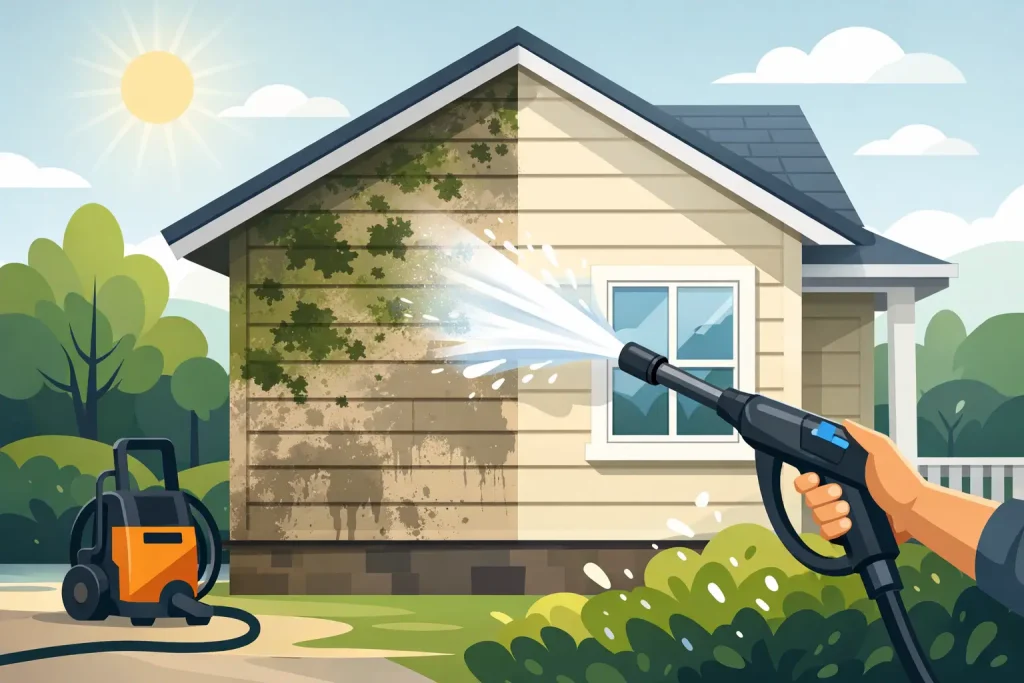
A black streak on a roof, green algae on siding, or an oil-stained driveway can make an otherwise well-kept property look neglected. More than a cosmetic issue, exterior buildup can hold moisture against surfaces, create slip hazards, and shorten the life of materials. Professional surface cleaning addresses the visible problem while protecting the surface underneath it.
For homes, storefronts, offices, and managed properties across Atlanta, the right cleaning approach makes the difference between a lasting improvement and unnecessary damage. Pressure is only one part of the job. The surface material, type of stain, surrounding landscaping, and condition of the property all matter before cleaning begins.
Why Surface Cleaning Requires the Right Method
Atlanta weather gives exterior surfaces plenty to contend with. Humidity, tree cover, pollen, rain, vehicle traffic, and red clay can leave layers of grime on siding, concrete, decks, fences, and walkways. Shade and retained moisture also encourage algae, mildew, and organic growth, especially on north-facing areas and surfaces beneath overhanging trees.
It may be tempting to treat every stain with maximum pressure, but that is rarely the safest or most effective solution. Excessive pressure can force water behind siding, scar wood fibers, dislodge mortar, strip paint, or damage roofing materials. A professional evaluates the surface first, then selects the water pressure, cleaning solution, rinse technique, and equipment needed for that material.
This surface-specific approach produces a cleaner result without treating your property as if every exterior material has the same strength and cleaning needs.
The Best Cleaning Approach for Common Exterior Surfaces
House siding and exterior trim
Vinyl, painted siding, stucco, and exterior trim often collect pollen, cobwebs, algae, and airborne dirt. These materials generally respond best to soft washing, which uses low pressure and properly applied cleaning solutions to break down organic buildup before a controlled rinse.
Soft washing is especially valuable around windows, vents, delicate trim, and older siding. The goal is not to blast contaminants away. It is to remove them thoroughly while reducing the risk of water intrusion or surface damage. A clean exterior can brighten the entire property and help reveal areas that may need paint, caulk, or repair.
Roofs
Roof stains are often caused by algae, not ordinary dirt. Those dark streaks can spread across shingles and make a roof appear worn long before it has reached the end of its service life. High-pressure roof washing is not the answer. It can loosen granules, disturb shingles, and create avoidable damage.
Low-pressure roof cleaning applies a roof-appropriate treatment that targets algae and related growth without aggressive force. Results may continue to improve after service as the treatment finishes working. Because roof access and runoff management require care, this is a job best handled by trained, insured professionals.
Concrete driveways, sidewalks, and patios
Concrete is durable, but it is also porous. Driveways and sidewalks absorb dirt, oil, rust, leaf tannins, tire marks, and organic stains. A flat, gray slab can look dramatically different after a professional cleaning, especially when the work is performed with equipment designed to clean evenly rather than leave visible streaks.
The right technique depends on the stain. General grime may lift with pressure and cleaning agents, while old oil spots or rust stains can require targeted treatment. Deep-set discoloration does not always disappear completely, particularly if it has been present for years, but professional cleaning can make a substantial improvement and restore a more uniform appearance.
Decks and fences
Wood surfaces require patience and restraint. Strong pressure may remove the weathered top layer, but it can also raise the grain, gouge boards, and leave an uneven finish that complicates staining or sealing. Composite decking has different concerns, including manufacturer guidance and the possibility of surface scarring.
A careful deck or fence cleaning process removes mildew, dirt, and discoloration with an appropriate combination of low pressure and surface-safe cleaners. If a deck is being prepared for staining, cleaning is an essential first step, but the wood also needs adequate time to dry before any coating is applied.
What a Professional Surface Cleaning Visit Should Include
Quality exterior cleaning begins before water reaches the property. A dependable crew should inspect the work areas, identify the materials involved, and note concerns such as loose siding, cracked concrete, failing paint, fragile landscaping, or existing stains that may not fully release.
Preparation also matters. Outdoor furniture, decorative items, and movable obstacles should be cleared from the work area. Nearby plants should be protected and rinsed as needed. Windows and exterior fixtures deserve special attention, as do electrical outlets, door thresholds, and drainage paths.
During cleaning, technicians should use controlled methods rather than a one-size-fits-all setting. That includes applying treatment where needed, allowing appropriate dwell time, using the proper pressure, and rinsing thoroughly. On commercial properties, crews should also consider pedestrian safety, vehicle access, operating hours, and how to keep entrances clear during service.
At Capital City Power Washing, the focus is on visible transformation with methods chosen to protect the material being cleaned. Licensed and insured service, advanced equipment, eco-friendly cleaning solutions, and attention to detail help homeowners and property managers feel confident about the work being performed.
When to Schedule Surface Cleaning
Most Atlanta properties benefit from exterior cleaning once a year. Properties with dense tree cover, heavy shade, nearby construction, high foot traffic, or frequent vehicle activity may need service more often. Commercial sidewalks and entryways, for example, can require periodic cleaning to maintain a professional appearance and reduce slick buildup.
Rather than waiting until stains become severe, watch for early warning signs: green or black growth on siding, dark roof streaks, a slippery walkway, dull concrete, dirty gutters, or a deck that looks gray and weathered. Addressing buildup early is generally easier on the surface and can help preserve curb appeal between larger maintenance projects.
Timing depends on your goals. Spring cleaning removes winter grime and pollen before outdoor gathering season. Late summer or fall service can clear algae, leaves, and seasonal buildup before cooler, wetter weather arrives. For businesses, scheduling around customer traffic and leasing activity can keep disruptions to a minimum.
Protecting Your Investment Between Cleanings
Professional cleaning delivers the major reset, but a few routine habits can help maintain results. Keep gutters clear so overflow does not streak siding or saturate walkways. Trim back branches that trap moisture against roofs, decks, and fences. Sweep leaves from patios and steps before they break down into stains, and address fresh vehicle fluid leaks before they soak deeply into concrete.
It also helps to avoid harsh household chemicals or rented pressure washers when you are unsure of the correct method. The immediate result can look acceptable while hidden damage develops underneath. A surface that has been etched, stripped, or saturated may cost far more to repair than it would have cost to clean correctly from the start.
A clean property sends a clear message to guests, customers, tenants, and neighbors: it is cared for. When stains, algae, and weather buildup begin to take over, choose surface cleaning that delivers the fresh appearance you want while giving your siding, roof, deck, and concrete the protection they deserve.