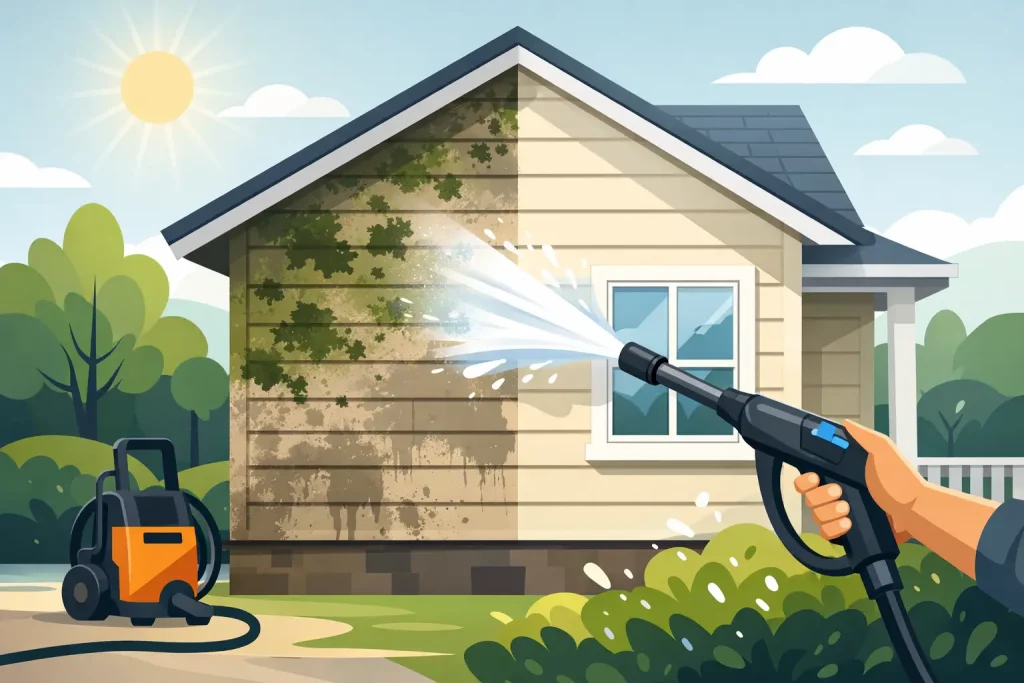
A blackened driveway, green siding, or oil-stained loading area can make a well-kept property look neglected fast. When comparing pressure washing versus power washing, the difference comes down primarily to water temperature, but choosing the right service also depends on the surface, the stain, and the condition of the property. The strongest setting is not always the best solution.
For Atlanta homeowners, business owners, and property managers, that distinction matters. Our humidity, pollen, shade, and frequent rain create ideal conditions for algae, mildew, and grime to build up on roofs, siding, concrete, decks, and walkways. A professional cleaning plan should remove the buildup while protecting the material underneath.
Pressure Washing Versus Power Washing: The Core Difference
Pressure washing uses high-pressure water to remove dirt, loose paint, mud, surface grime, algae, and other buildup. The water is typically unheated. A technician controls the result by adjusting pressure, water flow, nozzle angle, distance from the surface, and cleaning solution.
Power washing uses pressurized water that has been heated. Hot water is especially effective at breaking down grease, oil, gum, and stubborn residue that cold water may not lift as easily. Think of the difference between rinsing a greasy pan with cool water and washing it with hot water and detergent. Heat helps release oily contaminants.
The terms are often used interchangeably, even within the cleaning industry. That can be confusing, but it does not mean the services are identical. A trustworthy provider will focus less on the label and more on the cleaning method your surface requires.
For many residential exterior projects, standard pressure washing or soft washing is the appropriate choice. Heated power washing is often more useful for commercial concrete, restaurant-adjacent areas, parking spaces, dumpster pads, garage floors, and other surfaces with petroleum-based or food-related grease.
Why Pressure Alone Is Not the Answer
High pressure can produce dramatic results on durable concrete, but it can also cause unnecessary damage when used carelessly. Vinyl siding can crack or loosen, wood can splinter or develop raised grain, mortar can erode, and roof shingles can lose protective granules. Even concrete can show visible wand marks if the operator uses the wrong tip, moves too slowly, or applies uneven pressure.
That is why professional exterior cleaning is about control, not brute force. The right process begins with an assessment of the material, its age, its condition, and the type of staining present. A newer stamped concrete patio needs a different approach than an older driveway with embedded oil. A composite deck needs different handling than pressure-treated wood. A roof needs a completely different method from a sidewalk.
Water flow also matters. Pressure is measured in PSI, while flow is measured in gallons per minute. Higher PSI can help dislodge bonded debris, while adequate water flow helps rinse contaminants away efficiently. The right balance delivers a cleaner finish without treating every surface as though it were industrial concrete.
When Pressure Washing Is the Better Choice
Pressure washing is an effective option for hard, durable outdoor surfaces when the pressure is matched to the material. Driveways, sidewalks, patios, curbs, pool decks, brick, and many concrete surfaces often benefit from this approach.
On residential properties, it is commonly used to remove Atlanta red-clay residue, tire marks, mildew, leaf stains, dirt tracked onto walkways, and general weather buildup. For commercial properties, regular concrete and sidewalk cleaning can improve curb appeal, make entrances more welcoming, and help reduce the slippery film that develops in shaded or damp areas.
Pressure washing can also support surface preparation before painting or sealing, provided the surface is allowed to dry completely and the cleaning method is appropriate for the material. Removing loose contaminants gives coatings a cleaner surface to bond with.
Still, pressure washing is not automatically right for every visible stain. Rust, oil, fertilizer marks, paint, and organic discoloration may require targeted cleaners before or alongside rinsing. Simply increasing the pressure can make the problem worse, particularly on porous concrete or delicate masonry.
Concrete and Hardscape Cleaning
Concrete is one of the most common candidates for pressure washing because it is durable and naturally collects grime. But “durable” does not mean indestructible. Older concrete, cracked areas, decorative finishes, and loose mortar joints deserve careful attention.
A professional surface cleaner can create more even results across large driveways and sidewalks than a wand alone. It helps prevent striping while covering broad areas efficiently. Detail work around edges, steps, corners, and stains still requires a trained eye and the correct technique.
When Heated Power Washing Makes Sense
Power washing earns its place where grease and heavy buildup are the main problem. Heat helps soften oily residues so cleaning solutions and water can lift them from the surface more effectively. This is especially valuable for commercial properties where appearance and safety affect customers, tenants, and employees.
A restaurant walkway, service area, garage entrance, fleet space, or dumpster pad may have contaminants that cold water pressure alone cannot fully remove. Heated cleaning can reduce the time and chemical strength needed for certain jobs, though it must still be paired with responsible runoff management and surface-appropriate products.
Power washing is not automatically better simply because it uses hot water. Heat may be unnecessary for routine dirt, pollen, algae, or mildew. It may also be unsuitable for materials that are sensitive to temperature changes, certain coatings, or delicate exterior components. The most effective service is the one matched to the actual cleaning challenge.
Soft Washing Protects Delicate Surfaces
One of the biggest misconceptions about exterior cleaning is that every job requires forceful pressure. In reality, many of the most important surfaces around a property should be cleaned with low pressure.
Soft washing uses specialized solutions and a gentle rinse to treat organic growth such as algae, mildew, moss, and lichen. Rather than blasting the surface, the process addresses the source of the discoloration and rinses it away safely. This method is often preferred for roof washing, house washing, painted trim, vinyl siding, stucco, and other materials that could be damaged by aggressive pressure.
For roofs, low-pressure cleaning is especially important. High pressure can shorten the life of shingles, dislodge granules, force water beneath roofing materials, and create costly repairs. Dark roof streaks are often caused by algae, not dirt, so a properly applied soft wash can deliver a visible transformation without putting the roof at risk.
The same principle applies to wood decks and fences. Excessive pressure can carve lines into the wood and leave a rough, uneven finish. A careful cleaning process uses appropriate solutions, controlled pressure, and enough time for the surface to dry before any staining or sealing work begins.
How Atlanta Conditions Affect the Right Method
Atlanta-area properties face a combination of challenges: humid summers, heavy pollen seasons, leafy shade, clay soil, and frequent moisture. Green or black growth on siding, concrete, and roofs is common, especially on north-facing or heavily shaded sections of a property.
Organic growth should be treated, not merely pushed around with water. If the underlying algae or mildew is not addressed, staining can return quickly. That is why a professional may recommend a cleaning solution and low-pressure application for siding or roofing, then reserve higher pressure for the driveway, sidewalks, or other durable hardscape.
For property managers, scheduled exterior cleaning also helps maintain a more consistent presentation. Clean storefront approaches, sidewalks, common areas, and building exteriors signal that the property is cared for. For homeowners preparing to sell, cleaning can make a substantial difference in first impressions without the expense of major exterior renovations.
What to Expect From a Professional Service
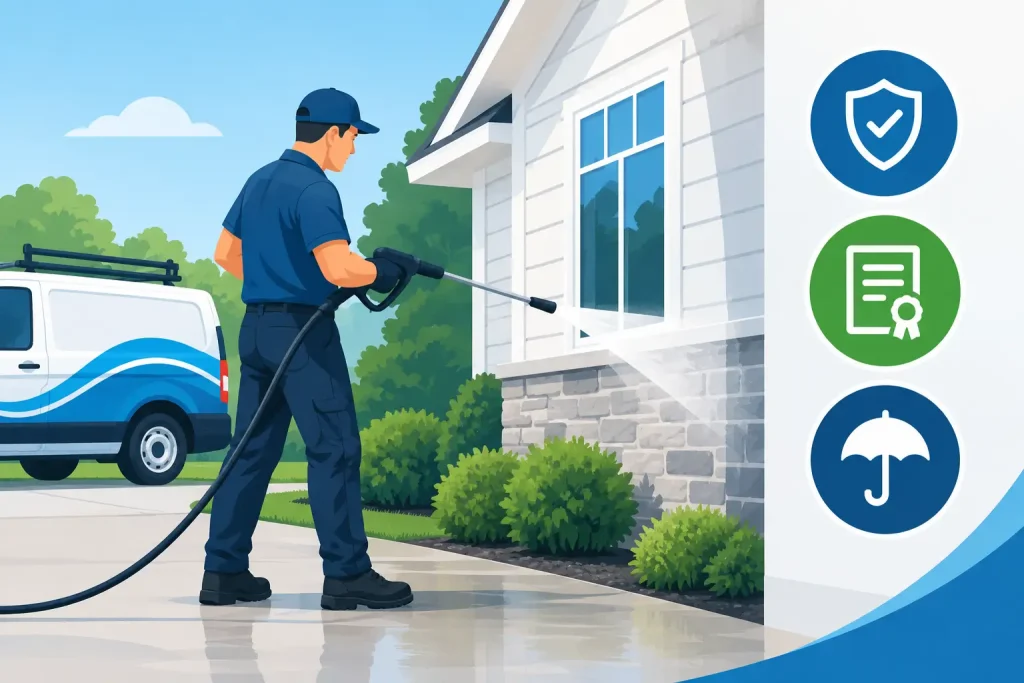
A quality cleaning service should not arrive with one setting and one plan for every surface. Before work begins, the technician should identify the material, inspect problem areas, protect nearby landscaping and exterior fixtures, and select a method that fits the job.
The process may include pre-treatment for stains, soft washing for delicate areas, controlled pressure washing for concrete, and detailed rinsing to leave the property clean rather than simply wet. Professional crews also understand where water should not be directed, including vents, electrical components, damaged siding, window seals, and roof edges.
Licensed and insured service provides another layer of confidence, particularly for large homes, commercial properties, multi-unit communities, and surfaces with visible wear. The goal is not just a bright before-and-after photo. It is a thorough result that protects the property and supports its long-term condition.
Choose the Method That Protects Your Property
The practical choice between pressure washing and power washing is rarely about which name sounds stronger. It is about matching water temperature, pressure, cleaning solutions, and technique to the surface in front of you. Cold-water pressure washing may be ideal for a driveway. Heated power washing may be the better answer for grease-heavy commercial concrete. Soft washing may be the safest and most effective option for your roof or siding.
If your Atlanta-area property is losing curb appeal to algae, stains, or weather buildup, Capital City Power Washing can evaluate the surface and recommend the right approach. A careful cleaning plan can restore the clean, well-maintained appearance you want without taking unnecessary risks with the materials you rely on every day.