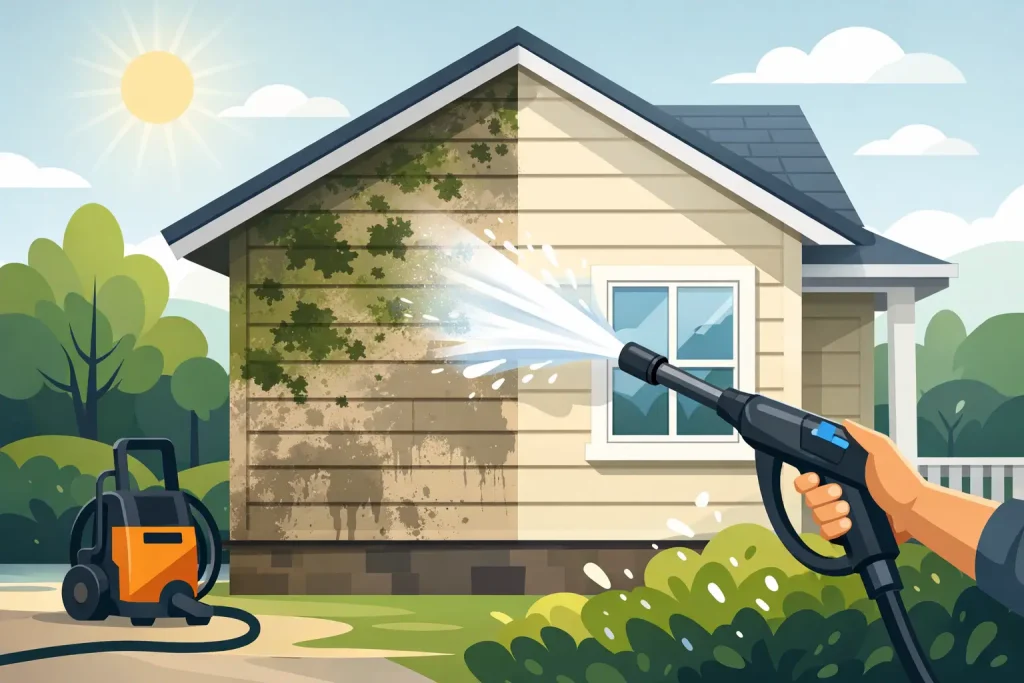
A roof can look stained long before it looks seriously neglected. In Atlanta’s warm, humid climate, moss often begins in shaded areas, around tree cover, and along sections of the roof that stay damp after rain. So, does roof washing kill moss? It can, but only when the job uses the right cleaning method and treatment. Water pressure alone may knock moss loose, but a professional soft wash is designed to treat the growth at its source.
For homeowners and property managers, the goal is not simply to make the roof look better for a few weeks. It is to remove moss safely, protect the roofing material, and reduce the conditions that allow organic growth to return.
Does Roof Washing Kill Moss or Just Remove It?
The answer depends on how the roof is washed. A proper low-pressure roof washing service uses a roof-safe cleaning solution that kills moss, algae, mildew, and other biological buildup. The treatment reaches the moss attached to the roof surface, helping break down the growth without relying on forceful water pressure.
High-pressure washing is a different matter. While it may make a roof appear clean quickly, it can also strip protective granules from asphalt shingles, loosen shingles, force water beneath roofing materials, and scatter moss without fully killing it. That is not a dependable long-term solution.
Moss holds moisture against the roof, and its small root-like structures can grip shingle surfaces and edges. When left untreated, it can contribute to lifted shingles, trapped debris, and persistent moisture. Soft washing addresses the organic growth while treating the roof with the care it requires.
Why Moss Grows So Easily on Atlanta Roofs
Moss needs moisture, shade, and organic material to establish itself. Atlanta-area properties often provide all three, especially during long humid seasons and after frequent rain. Roofs beneath overhanging branches or near dense landscaping tend to dry more slowly, creating a favorable environment for moss, algae, and mildew.
North-facing roof slopes are also common trouble spots because they receive less direct sunlight. Gutters filled with leaves can worsen the issue by allowing water and debris to collect along the roof edge. Even a newer roof can develop moss if moisture stays in place long enough.
Dark roof streaks do not always mean moss. In many cases, they are algae staining. Moss is usually thicker, greener, and more textured than algae. A trained exterior cleaning professional can identify what is on the roof and choose an appropriate cleaning approach rather than treating every stain the same way.
How Professional Soft Washing Works
Roof cleaning should never be a one-size-fits-all service. Before cleaning begins, the roof should be assessed for its material, age, visible condition, drainage areas, landscaping, and the extent of moss growth. This helps determine whether cleaning is appropriate and how the work should be performed.
A professional soft wash applies a specialized cleaning solution at low pressure. The solution does the cleaning work, rather than a harsh blast of water. Moss and staining are treated carefully, then allowed to release from the roof surface over time or be gently rinsed according to the condition of the roof and the manufacturer’s recommendations.
A responsible process also includes protecting surrounding plants, managing runoff, and avoiding unnecessary exposure to exterior surfaces. For homes and commercial properties, careful preparation matters as much as the visible result. The roof, gutters, siding, landscaping, and surrounding walkways all deserve attention during the service.
Capital City Power Washing uses surface-appropriate low-pressure methods because a clean roof should not come at the expense of damaged shingles or avoidable property risk.
What to Expect After Moss Treatment
A freshly treated roof may not always look perfectly uniform the moment the service is complete. Heavy moss can take time to fully loosen and weather away, particularly where it has built up for years. The treatment kills the growth, and normal rain and weathering can help clear remaining material gradually.
This is often safer than aggressive scraping or pressure washing. Trying to force every trace of moss off during one visit can damage shingles, dislodge granules, or disturb fragile roof areas. A professional will prioritize the roof’s condition over an overly aggressive instant result.
If moss is especially thick, the roof may require more than one treatment or a scheduled maintenance plan. This is not a sign that the process failed. It reflects the amount of organic growth present and the need to clean without harming the roofing system.
When Roof Washing May Not Be the Right Answer
Roof washing is highly effective for moss and algae growth on a structurally sound roof. It is not a substitute for roof repair or replacement. If shingles are cracked, missing, curling, severely worn, or already leaking, cleaning should wait until a qualified roofing professional evaluates the condition.
The same applies to roofs with significant storm damage or areas where moss has been allowed to grow unchecked for many years. Cleaning can improve appearance and help prevent further buildup, but it cannot restore materials that have reached the end of their service life.
A trustworthy cleaning company will explain these limits clearly. The right recommendation is not always the fastest service. It is the service that protects your property and makes sense for the condition of the roof.
How to Keep Moss From Returning
Roof washing removes existing growth, but ongoing maintenance helps extend the results. Start by keeping gutters clear so water can move away from the roofline. Leaves, pine needles, and other debris should be removed before they hold moisture against shingles.
Trimming back branches can also improve sunlight and airflow over the roof. This does not mean removing every nearby tree. It means reducing heavy overhangs that constantly drop debris and leave sections of the roof damp for extended periods.
For many Atlanta homeowners, periodic roof inspections and professional cleaning are the most practical approach. The right timing depends on shade, roof material, nearby trees, drainage, and how quickly organic growth returns. Properties with substantial tree cover usually need attention more often than sunny, open properties.
Common Questions About Moss Removal
Can I pressure wash moss off my roof myself?
It is not recommended. Consumer pressure washers can easily damage shingles, remove protective granules, push water under roofing materials, and create a safety hazard on a wet roof. Moss removal requires a low-pressure method designed specifically for roofing surfaces.
Will roof washing damage my landscaping?
A careful professional process includes preparation and protection for nearby landscaping. Plants should be pre-rinsed, monitored during cleaning, and rinsed again as needed. Proper application and runoff management are essential parts of a safe roof washing service.
How often should a roof be cleaned for moss?
There is no single schedule for every property. A shaded home in DeKalb, Cobb, or Gwinnett County may need treatment sooner than a property with full sun and limited tree cover. An annual visual inspection is a practical starting point, with cleaning scheduled when moss, algae, or debris begins to build up.
A moss-covered roof is more than a curb appeal issue. Addressing it early with the right low-pressure treatment helps protect the roof you already have, keeps your property looking cared for, and avoids turning a manageable cleaning need into a more expensive maintenance problem.