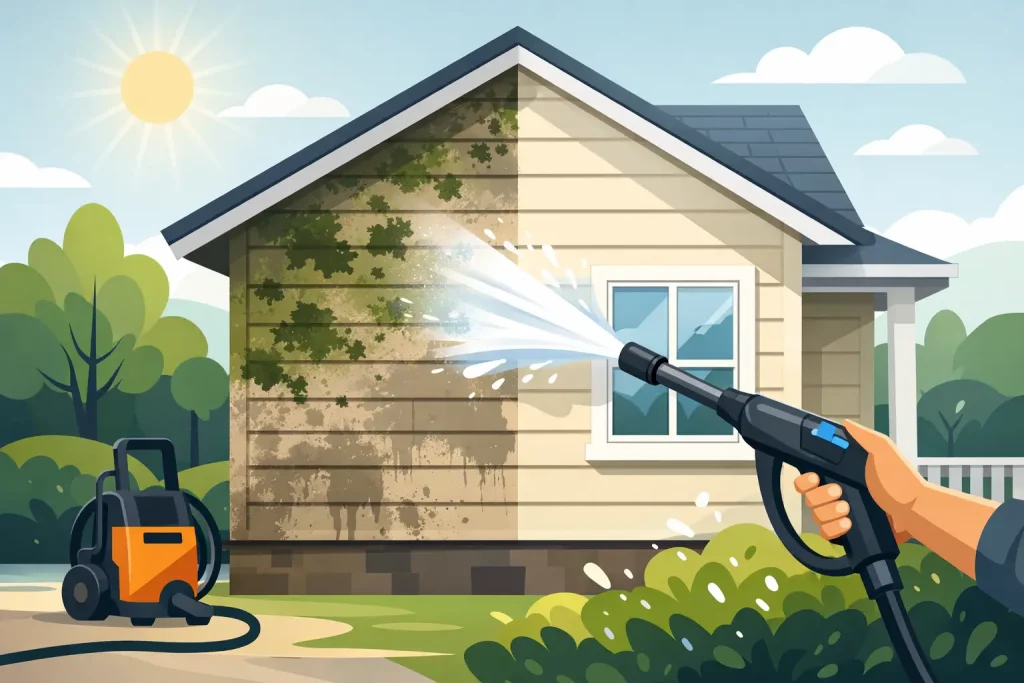
A cleaner can be labeled green and still be the wrong choice for your siding, roof, landscaping, or concrete. So, are eco friendly cleaners safe? When they are selected for the specific surface, mixed correctly, and applied by trained professionals who manage runoff, they can be a safer and highly effective option for exterior cleaning.
For homeowners and property managers in Atlanta, that distinction matters. Our humid climate creates ideal conditions for algae, mildew, pollen, and grime, but aggressive cleaning methods can damage paint, force water behind siding, harm plants, or shorten the life of roofing materials. Safe cleaning is not about using the strongest product available. It is about using the right method to get a lasting result without putting your property at risk.
What “Eco Friendly” Really Means in Exterior Cleaning
Eco-friendly cleaning products are generally formulated to reduce environmental impact compared with harsher traditional chemicals. They may be biodegradable, low in certain harmful compounds, phosphate-free, or designed to break down more readily after use. Those are meaningful benefits, but an eco-friendly label is not a blanket guarantee that a product is harmless in every situation.
Any cleaning solution can cause problems when it is overapplied, mixed improperly, or allowed to collect in a concentrated area. A biodegradable product may still irritate skin or eyes before it is diluted. A solution that is appropriate for concrete may not be appropriate for delicate plant leaves or unfinished wood. Professional cleaning starts with understanding those differences rather than relying on a label alone.
The safest approach combines surface-appropriate solutions, correct dilution, controlled application, proper dwell time, thorough rinsing, and attention to where the water flows. That is the difference between simply spraying a cleaner and providing responsible exterior property care.
Are Eco Friendly Cleaners Safe for People and Pets?
Used as directed, many environmentally responsible cleaners offer a lower-exposure option for households, employees, visitors, and pets. Still, “lower exposure” does not mean no precautions are needed. Cleaning crews should keep people and pets away from the active work area until surfaces are rinsed and dry, especially around entryways, patios, sidewalks, and play areas.
The same common-sense rules apply to any professional cleaning service. Do not touch wet treated surfaces, and avoid allowing pets to drink from puddles or rinse water. If a home has a pet area, vegetable garden, koi pond, or a family member with chemical sensitivities, mention it before service begins. This gives the cleaning team a chance to plan the work carefully and protect those areas.
For commercial properties, the process should also account for customer traffic. A well-managed cleaning plan may include scheduling work during quieter hours, marking damp walkways, and keeping entrances clear. Safety is not limited to what is in the cleaning solution. It includes how the entire job site is managed.
Plant Safety Depends on Preparation and Rinsing
Landscaping is one of the biggest concerns homeowners have when scheduling house washing or roof cleaning. It is a valid concern. Shrubs, flowers, turf, and young plantings can be sensitive, particularly during hot, dry Atlanta weather.
Professional crews protect landscaping before treatment begins by pre-wetting plants, controlling the application area, avoiding unnecessary overspray, and rinsing vegetation again after the work is complete. Water helps dilute incidental contact and prevents residue from sitting on leaves. Covering certain delicate plants may also be appropriate, although covers should not be left on long enough to trap heat and stress the plant.
Runoff management matters just as much. A dependable exterior cleaning provider watches downspouts, drains, slopes, and low spots where water can gather. The goal is to keep cleaning solutions from concentrating near landscaping or moving into areas where they do not belong.
No outdoor cleaning process can eliminate every variable. Wind, drought-stressed plants, existing disease, and poorly drained beds can all affect results. That is why a property walkthrough and clear communication are valuable before the job starts.
The Cleaner Is Only Half the Equation
A gentle cleaner can still be paired with an unsafe technique. High pressure applied too close to siding can leave marks, strip paint, and drive water behind exterior materials. On a roof, it can dislodge granules or damage shingles. On wood, excessive pressure can raise the grain and create a rough, uneven appearance.
That is why surface-specific methods matter. Soft washing uses low pressure with properly chosen cleaning solutions to lift organic growth from siding, painted surfaces, and many roof systems. Low-pressure roof cleaning is designed to address algae and dark staining without the damage associated with blasting a roof with high pressure.
Concrete, driveways, sidewalks, and some masonry surfaces can often tolerate more mechanical cleaning, but even there, technique matters. Oil stains may require targeted treatment, while old or cracked concrete may need a more cautious approach. The best result comes from matching water pressure, temperature, cleaner, and equipment to the condition of the material.
When Eco-Friendly Products May Not Be Enough Alone
Eco-conscious cleaning does not have to mean weak cleaning. However, severe staining, heavy oil buildup, deeply embedded rust, graffiti, or years of neglected organic growth can require specialized products or repeated treatment. In those cases, a professional should explain what is being used, why it is necessary, and what precautions will protect the property.
There are trade-offs. A milder formula may require more dwell time or a second application. A stronger targeted product may be needed for one stubborn stain but should be confined to that area and thoroughly rinsed. The right decision depends on the surface, the stain, nearby landscaping, drainage, and the level of restoration needed.
Be cautious of promises that one product is completely safe for every surface and every situation. Exterior cleaning is more nuanced than that. A company that takes safety seriously will assess the property instead of using a one-size-fits-all process.
Questions to Ask Before Scheduling Exterior Cleaning
Before hiring a pressure washing company, ask how they choose products for different surfaces and how they protect plants, pets, and nearby drainage areas. Ask whether they use soft washing for siding and roofs, whether they are licensed and insured, and how they handle pre-existing damage such as loose siding, cracked concrete, failing paint, or aging shingles.
You should also expect a clear explanation of what the cleaning can and cannot restore. A professional wash can dramatically improve curb appeal by removing dirt, algae, mildew, and weather-related buildup. It cannot repair rotten wood, replace missing roof shingles, or reverse permanent staining caused by damaged coatings. Honest expectations are part of quality workmanship.
At Capital City Power Washing, the focus is on delivering visible results while protecting the surfaces that make up your property. That means evaluating the material first, using appropriate cleaning methods, and treating landscaping and surrounding areas with care.
A Safer Way to Restore Curb Appeal
Eco-friendly cleaners can be a smart choice for exterior maintenance, but safety comes from the full process: the product, the dilution, the pressure level, the crew’s experience, and the care taken around your home or business. When algae starts spreading across siding, a roof looks streaked, or concrete begins to look neglected, addressing it early is often gentler on the surface than waiting for buildup to become severe.
Choose a cleaning provider that is willing to explain the plan for your specific property. A careful approach protects more than curb appeal – it helps preserve the materials, landscaping, and peace of mind you rely on every day.